

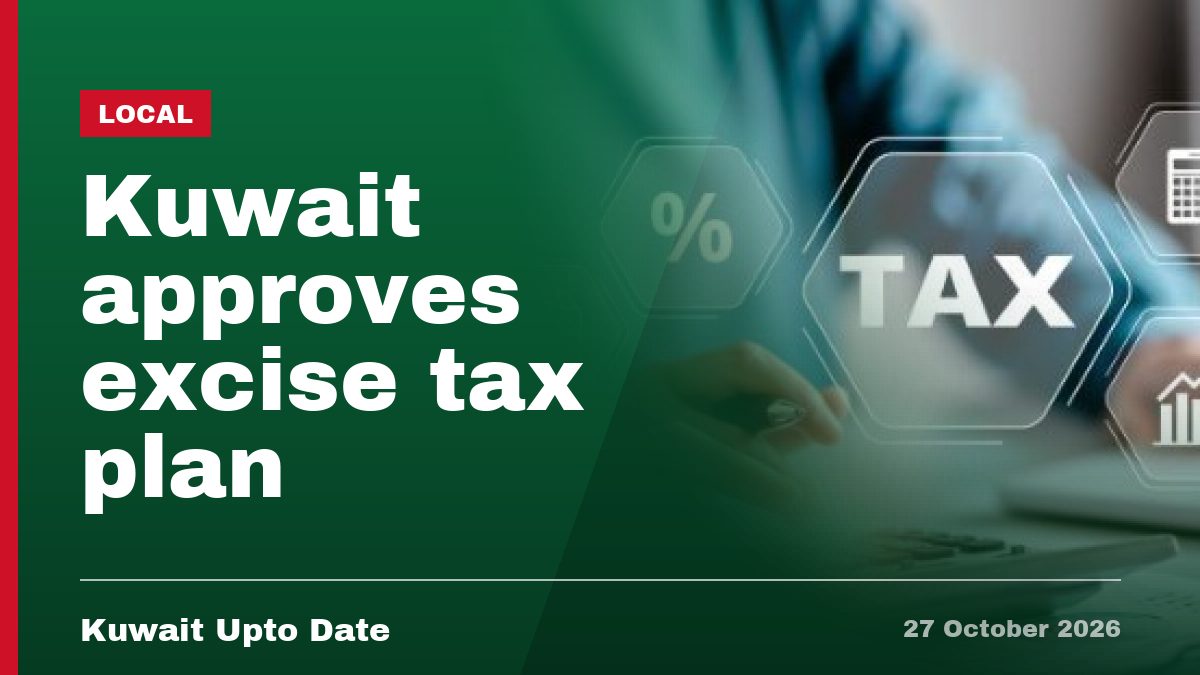
On Tuesday, 27 October, Kuwait’s Cabinet sat down for its weekly meeting and, among the usual business, signed off on something that could change what you pay for a pack of cigarettes or an energy drink. It didn’t make headlines right away. But it’s one of those decisions that quietly affects almost everyone who buys these products in Kuwait.
The Cabinet approved a draft decree-law to adopt the Gulf Cooperation Council’s (GCC) Unified Excise Tax Agreement, along with an amendment to it. The draft has now gone to Emir Sheikh Meshal Al Ahmad Al Jaber Al Sabah for his approval, according to an official statement. This comes not long after Kuwait introduced a new medical liability appeal fee, part of a wider pattern of the government looking for new sources of income.
- Kuwait’s Cabinet approved a plan to adopt a GCC-wide excise tax on tobacco, energy drinks and sugary beverages.
- Tobacco and energy drinks would be taxed at 100%, carbonated drinks at 50%, and sweetened drinks at rates based on sugar content.
- The goal is to cut consumption of unhealthy products and raise an estimated KD 200 million a year in non-oil revenue.
- No start date has been announced yet. The draft still needs the Emir’s approval.
What exactly did the Cabinet approve?
The Cabinet, chaired by Prime Minister Sheikh Ahmad Abdullah Al Ahmad Al Sabah, approved the draft law covering the GCC’s Unified Excise Tax Agreement and its amendment. This is a shared tax framework that all six Gulf countries agreed to work towards together, not something Kuwait is doing alone.
Under the plan, here’s how the rates would break down:
- Tobacco products: 100% excise tax.
- Energy drinks: 100% excise tax.
- Carbonated beverages: 50% excise tax.
- Sweetened drinks: a rate that depends on how much sugar they contain, rather than one fixed number.
The idea behind an excise tax is simple: make products that are bad for your health, or for the environment, more expensive, so fewer people buy them. Kuwait has talked about this kind of tax for years, and this Cabinet approval is the clearest sign yet that it’s moving forward.
Why now, and why does Kuwait want this?
Money is a big part of the answer. Kuwait’s former finance minister, Noura Al Fassam, had earlier estimated that an excise tax could bring in about KD 200 million a year. For a country that depends heavily on oil income, that’s a meaningful amount of non-oil revenue, and it fits into a broader push to diversify the economy.
The GCC agreement does more than set tax rates. It also creates a common system for collecting the tax, tracking how taxable goods move between Gulf countries, and keeping tax rules consistent across the region. A body called the GCC Financial and Economic Cooperation Committee will decide exactly which goods get taxed, set the rates, and approve any future changes. That means some of the details could still shift even after Kuwait’s own law is finalised.So who does this affect, and when?
If you buy cigarettes, energy drinks, sodas or sweetened beverages in Kuwait, this is for you. That covers a huge number of people, citizens and expats alike, since these products sit in nearly every supermarket, corner shop and petrol station across the country.
Here’s the catch: there’s no confirmed date yet for when these taxes actually start. The Cabinet has approved the draft, but it still needs the Emir’s sign-off, and the government hasn’t said when the new levies would take effect. So for now, nothing changes at the till. But once it’s signed and a start date is set, expect prices on these specific products to rise, possibly by a lot given the 100% rate on tobacco and energy drinks.
It’s worth remembering that neighbouring Gulf states have already rolled out similar taxes over the past several years, so Kuwait would be catching up with a regional trend rather than starting something brand new. You can read more local news from Kuwait as this story develops.
What else happened in this Cabinet meeting?
The excise tax wasn’t the only item on the agenda. Ministers were briefed on Italian Prime Minister Giorgia Meloni’s recent official visit to Kuwait, during which the two countries signed agreements on investment cooperation and military training, plus a letter of intent involving the Italian defence company Leonardo.
The Cabinet also reviewed progress on several infrastructure projects. These include the North Kabd wastewater treatment plant, ongoing road maintenance and rehabilitation programmes, and upgrades to the road networks serving Kuwait International Airport’s new Terminal 2. Ministers stressed the need to finish these projects on schedule, keep construction standards high, and improve road safety and traffic flow around the country. That kind of focus on road upgrades echoes other recent changes, like the Al Satwa roundabout traffic signal that cut travel time in that area.
Quick answers
When does the new excise tax start in Kuwait?
There’s no confirmed date yet. The Cabinet approved the draft law, but it still needs the Emir’s approval, and no start date has been announced.
Will all sugary drinks be taxed the same amount?
No. Carbonated drinks face a 50% tax, but sweetened drinks are taxed at rates that depend on their sugar content, so the exact amount can vary by product.
Is this a Kuwait-only tax or a Gulf-wide one?
It’s part of a GCC-wide agreement that all six Gulf countries have worked on together, aimed at making tax rules consistent across the region.
How much money does Kuwait expect to raise from this?
Kuwait’s former finance minister, Noura Al Fassam, previously estimated the tax could generate about KD 200 million a year in non-oil revenue.
For now, this is a wait-and-watch story. The law still needs the Emir’s approval and a start date before anything changes in shops. If you smoke, drink energy drinks, or just want to stock up before prices move, it might be worth keeping an eye on this one. Have you seen similar excise taxes affect prices elsewhere in the Gulf? Share your experience in the comments.
📌 Related stories


Latest News
 Local
Video – Buildings demolishing started in jleeb.
 2
International US tells Gulf states to brace for possible Iran strikes
Read more →
 3
Kuwait Facts
Read more →
 4
International Philippines e-Visa Launches in Dubai: What It Means for You
Read more →
 5
International Saudi Arabia Launches Digital Entry App for GCC residents.
Read more →
 6
International 315 people are missing
Read more →
 7
Local Indian expat held in Kuwait over maid-hiring fraud scam
Read more →
 8
Local Kuwait sets KD 200 fee to appeal medical liability
Read more →
 9
International US Orders Non-Emergency Staff to Leave Saudi Arabia
Read more →
 10
International Trump: Iran strike possible ‘tomorrow’, deal still open
Read more →
 11
Local Transfer your money in seconds
Read more →
 12
International world’s first 24-carat gold walking path.
Read more →
 13
International What the New US Travel Advisory for Saudi Arabia and UAE
Read more →
 14
International What Trump’s latest Iran strike warning mean.
Read more →
 15
Local Fake Germany job offer costs Hawally woman KD 1,000
Read more →
Leave a Reply