

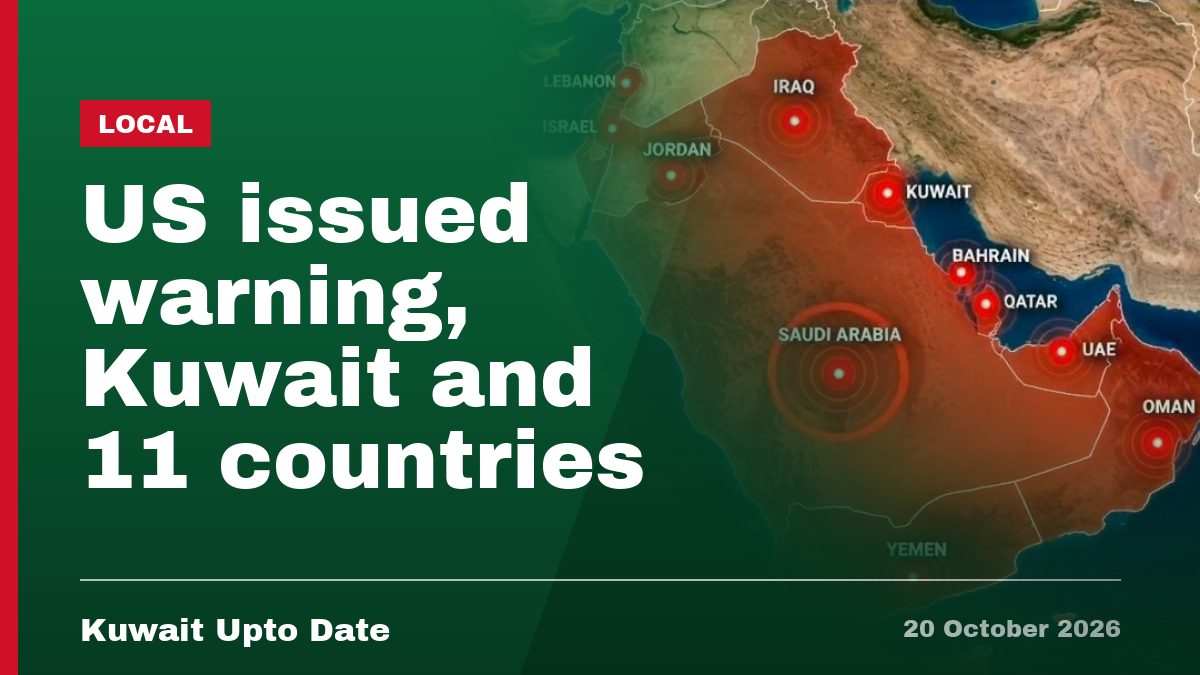
What caught my attention most is this: the US didn’t send out 12 different warnings for 12 different countries. It sent the exact same alert, word for word, to Americans in Kuwait, Saudi Arabia, Israel, Iraq, Lebanon, Jordan, Qatar, Bahrain, Oman, the UAE, Yemen and Iran, all on the same day. That almost never happens. Here is what I found out.
WhatsApp ChannelJoin our WhatsApp ChannelGet Kuwait news, new rules, fees and deadlines straight on WhatsApp. Free – no spam, no group chat.Join Channel →On Monday, US embassies across the region, including the one here in Kuwait, posted identical security messages telling American citizens to stay alert. The reason given is simple but serious: rising military tension linked to Yemen’s Houthi group and Iran, and the real chance that flights get cancelled or airspace gets closed with little warning.
- US embassies in 12 Middle East countries, including Kuwait, issued the same security alert on Monday
- It warns of possible flight cancellations, airspace closures and travel disruption
- The alert says hostilities tied to the Houthis and Iran could escalate beyond the immediate area
- Qatar Airways has already suspended some Riyadh and Dammam flights until 24 October
What the alert actually says
The wording used across all 12 countries warns that “the hostilities have the potential to escalate rapidly beyond that immediate area” and tells citizens to “develop contingency plans in advance.” That phrase, contingency plans, is the US government’s polite way of saying: have a backup plan if your flight gets grounded or your area becomes unsafe.
The alert also goes further than just flights. It states that “Iran and groups supportive of Iran may target other US interests overseas or at locations associated with the United States and Americans throughout the world, including US businesses and other institutions.” That line appears word for word in the alerts sent to Kuwait and every other country on the list.
Why Saudi Arabia got extra detail
The US embassy in Saudi Arabia added more specifics than the general regional alert. It described a “complex security environment” there, saying Iranian-supported Houthis “have engaged in hostilities against Saudi Arabia, including attacks on civilian airports and other critical infrastructure resulting in civilian casualties and severe travel disruptions.”
This isn’t the first warning on this. We’ve covered the Houthi attacks on Saudi airports and the civilian casualties that followed, as well as the US alert over Houthi airport threats issued earlier this month. Riyadh and Jeddah airports have both told travellers to check their flights before heading out, and flight bans affecting some routes were extended into mid-October after the missile debris incident that injured people and damaged homes near Riyadh.
What about Qatar?
A day before the wider alert, on Sunday, the US embassy in Qatar told its citizens to monitor official alerts and local media, avoid demonstrations and large gatherings, and follow instructions from local authorities. Then on Monday, Qatar Airways confirmed it is suspending flights to and from Riyadh and Dammam until 24 October, and cutting its daily Jeddah flights from seven down to four.
So who does this affect in Kuwait? Right now, the alert names Kuwait as one of the 12 countries covered, but it does not list any specific incident inside Kuwait itself, unlike the detail given for Saudi Arabia. The concern for people here is mainly about regional travel: flights connecting through or to Saudi Arabia, and the general risk that airspace across the Gulf could get disrupted if tensions rise further.
We reported earlier this week on the separate US embassy alert warning Americans in Kuwait specifically about flight risks tied to the wider Gulf tensions, and on reports that the US is weighing further strikes on Iran. Both of those stories sit alongside this new regional alert and point in the same direction: Washington expects things could get worse before they get better.
What this means if you live here
If you’re a US citizen in Kuwait, the advice is to register with the embassy’s alert system if you haven’t already, keep an eye on official channels, and build some flexibility into any upcoming travel plans, especially anything routing through Saudi Arabia.
For everyone else in Kuwait, citizens and expats of all nationalities, the practical takeaway is similar. If you’ve got flights booked through Riyadh, Dammam or Jeddah in the coming days, check your airline’s status page before you leave for the airport. Airlines like Qatar Airways have already changed schedules once this month, and they could change again. You can keep up with ongoing changes in our <a href=
Latest News
 International
UK warns Britons in Saudi Arabia as Houthi attacks rise
2 Local How to apply for Kuwait’s new freelance business licence Read more → 3 Local Kuwait to fine overloaded trucks instantly for road damage Read more → 4 International Kuwait to link deportee fingerprint data electronically with GCC Read more → 5 International ‘Instagram King’ arrested. Read more → 6 Local New Jira Park in Kuwait Read more → 7 Local Kuwait is checking small repeated transfers Read more → 8 Local Kuwait to fine vehicles on the spot for damaging roads Read more → 9 International Saudi coalition shoots down two Houthi drones over Mecca Read more → 10 Local Puppy found at Kuwait base reunites with US couple after 6 months Read more → 11 Local Kuwait warns of fake Interior Ministry scam on WhatsApp Read more → 12 Local Kuwait lawyers told to stop promoting on TikTok Live Read more → 13 International Saudi forces down 3 Houthi missiles aimed at Riyadh Read more → 14 International Kuwait, Pakistan PMs meet at COP31 to boost ties Read more → 15 Local What Warba Bank’s MENA award win means for Kuwait banking Read more →
Leave a Reply