

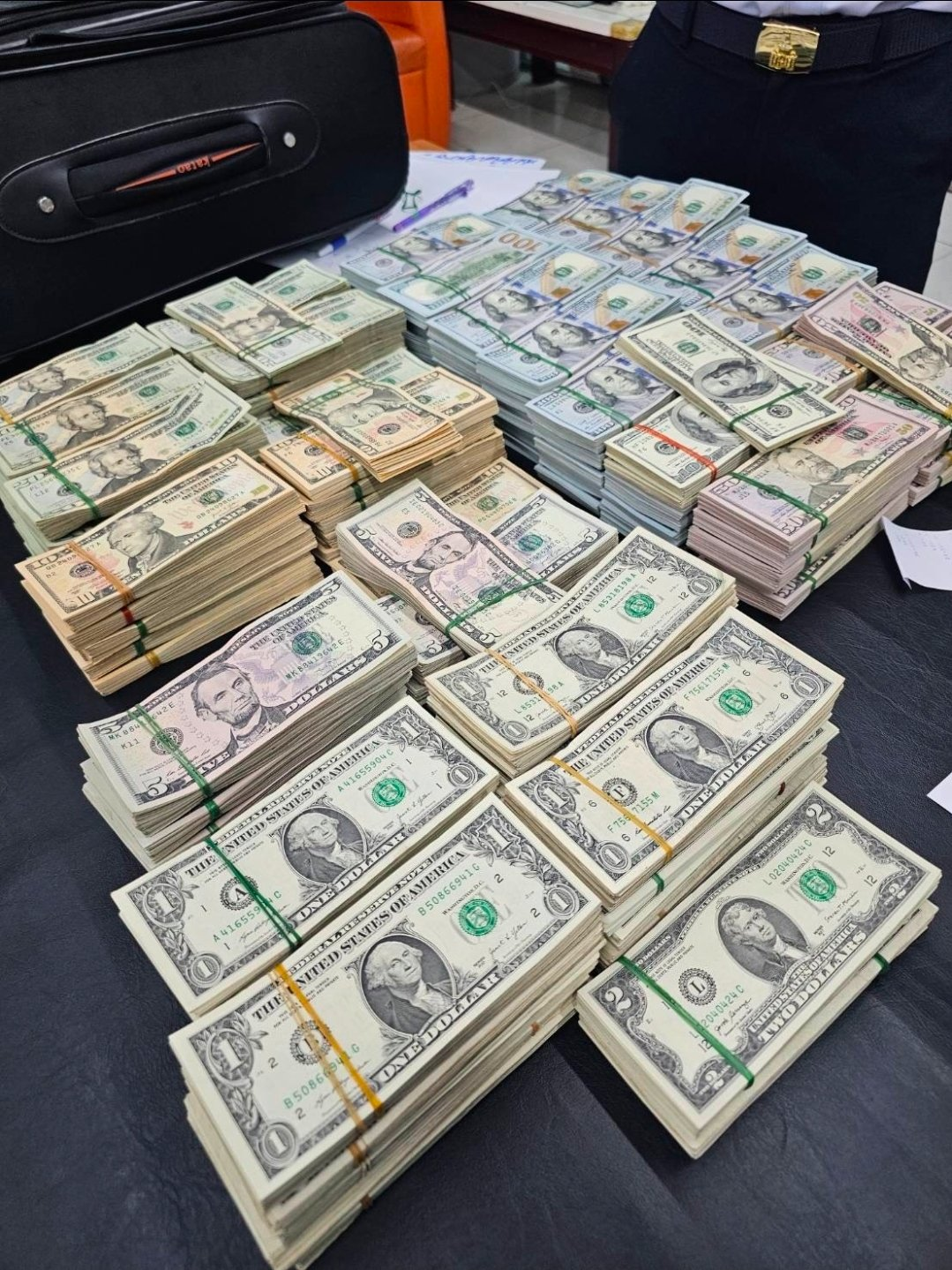
Two passengers arriving in Bangkok from Jakarta were stopped at Suvarnabhumi Airport with more than US$1.67 million in cash stuffed into their luggage. Not wired through a bank, not declared, just hidden in bags.
If you travel often between Kuwait and other countries, this is the kind of story worth paying attention to. It’s not about Kuwait directly, but it’s a sharp reminder of how customs authorities everywhere, including here, are watching cash movements far more closely than they used to.
Here’s what actually happened, and why it matters if you ever carry large sums across borders.
- Thai customs officers arrested two foreign passengers at Suvarnabhumi Airport on 30 September 2026
- They were found with US dollar banknotes worth more than 56 million baht, roughly US$1.67 million, concealed in their luggage
- The pair had flown in from Jakarta, Indonesia, and are accused of breaching Thailand’s currency control and customs laws
- The arrests came after Thailand’s Deputy Prime Minister and Finance Minister, Ekniti Nitithanprapas, ordered tighter controls on cross-border cash movement to fight smuggling and money laundering
What exactly happened in Bangkok?
According to Thai customs officials, the two passengers arrived from Jakarta and were flagged during checks at Suvarnabhumi, one of Southeast Asia’s busiest airports. Officers searched their luggage and found US dollar banknotes worth over 56 million baht, around US$1.67 million, hidden away rather than declared.
Customs said the pair had violated Thailand’s currency control and customs laws. No further details have been released about their nationalities, what the money was meant for, or what happens next in their case, so that part isn’t confirmed yet.
What we do know is that this wasn’t a random check. It followed a direct order from Deputy Prime Minister and Finance Minister Ekniti Nitithanprapas to tighten scrutiny on cross-border currency movements, specifically to combat smuggling and potential money laundering. Thai customs officials said they’ve since stepped up checks on passengers considered high risk.
Why is this showing up on a Kuwait website?
Fair question. This case is in Thailand, not here. But the reason it’s worth sharing is that it mirrors something Kuwait residents should already know about: Kuwait’s own rule requiring declaration of KD 3,000 or more when entering or leaving the country. Customs authorities in Kuwait, like those in Thailand, are not just asking you to fill in a form for fun. They’re trying to catch exactly this kind of thing: large sums moved quietly, without a paper trail, that could be linked to smuggling or laundering.
Kuwait has also tightened rules around what you can carry through its airports more generally. There was a recent reminder that passengers are not allowed to carry bags belonging to other people through Kuwait Airport, partly for the same reason: officials want to know exactly who is responsible for what’s inside a bag, cash included.
So who does this actually affect?
If you’re an expat sending money home, a business traveller carrying funds, or even someone bringing cash as a gift or for a big purchase, this is relevant to you. It doesn’t matter whether you’re a Kuwaiti citizen or a resident on any kind of visa. If you’re moving large amounts of cash across any international border, including through Kuwait, you’re expected to declare it honestly and accurately.
The Thailand case is a useful example of what happens when someone doesn’t. Concealing cash in luggage instead of declaring it isn’t a grey area anywhere. It’s treated as a breach of customs and currency control law, and in this case, it led to arrest.
It’s also worth remembering that these cases usually surface because of financial crime concerns generally, not because carrying cash itself is illegal. Kuwait’s courts have handled similar cases too. Eight expats were jailed earlier this month in a money laundering case, a reminder that financial crime enforcement here is active, not just on paper.
What this means for people living in Kuwait
For most of us, this changes nothing day to day. Most people aren’t carrying hundreds of thousands of dollars in a suitcase. But if you do have a legitimate reason to move a large sum, whether it’s for a property purchase abroad, a business deal, or supporting family overseas, the lesson from this case is simple: declare it, keep documentation, and don’t assume customs won’t check.
Authorities worldwide, Thailand included, are leaning harder on these checks right now. Kuwait is part of that same trend given its own KD 3,000 declaration threshold. Travellers passing through Kuwait International Airport should expect the same level of scrutiny, not less.
Quick answers
Is carrying large amounts of cash illegal?
No, carrying cash isn’t illegal on its own. The problem arises when it’s not declared as required by law, or when it’s deliberately hidden, as in this Thailand case.
What’s the cash declaration threshold in Kuwait?
Travellers carrying KD 3,000 or more into or out of Kuwait are required to declare it to customs.
Were the two passengers in Thailand named?
No. Thai customs officials have not released their names or nationalities, so that detail isn’t confirmed.
I don’t know about you, but stories like this make me double-check what I’m carrying before any flight, even when it’s nowhere near six figures. Have you ever had to declare cash at Kuwait Airport? I’d be curious to hear how straightforward, or not, the process actually was.
📌 Related stories
Latest News
 Local
Housemaid Beaten With Stick, Doused With Chlorine and Left Without Help Dies; Saudi Woman Gets 10 Years
2 Local Woman 10 years jail maid death Read more → 3 International Gulf states ink deal to link region by rail Read more → 4 Local Kuwait tells subscribers in 5 areas to switch to fiber-optic Read more → 5 Local Kuwait plans to turn 7 heritage sites into hotels Read more → 6 International Building in Riyadh hit by shrapnel in attack attempt Read more → 7 Local Kuwait court jails driver for over speeding Read more → 8 International Riyadh on alert by Saudi Civil Defence Read more → 9 Local WhatsApp to stop on some iPhones from 30 November Read more → 10 Local Egyptian singer Ramy Sabry books Kuwait concert for 24 December Read more → 11 Local Video – Kuwait scam alert: fake police now add fake bank staff on video calls Read more → 12 International Hackers spread equivalent of 1.96 billion KWD theft across 10,000 wallets Read more → 13 Local Being an Expat: What Is My Future in Kuwait? Read more → 14 Local Kuwait’s police to get body cameras soon Read more → 15 Local Women no longer need husband’s OK for passports Read more →
Leave a Reply