

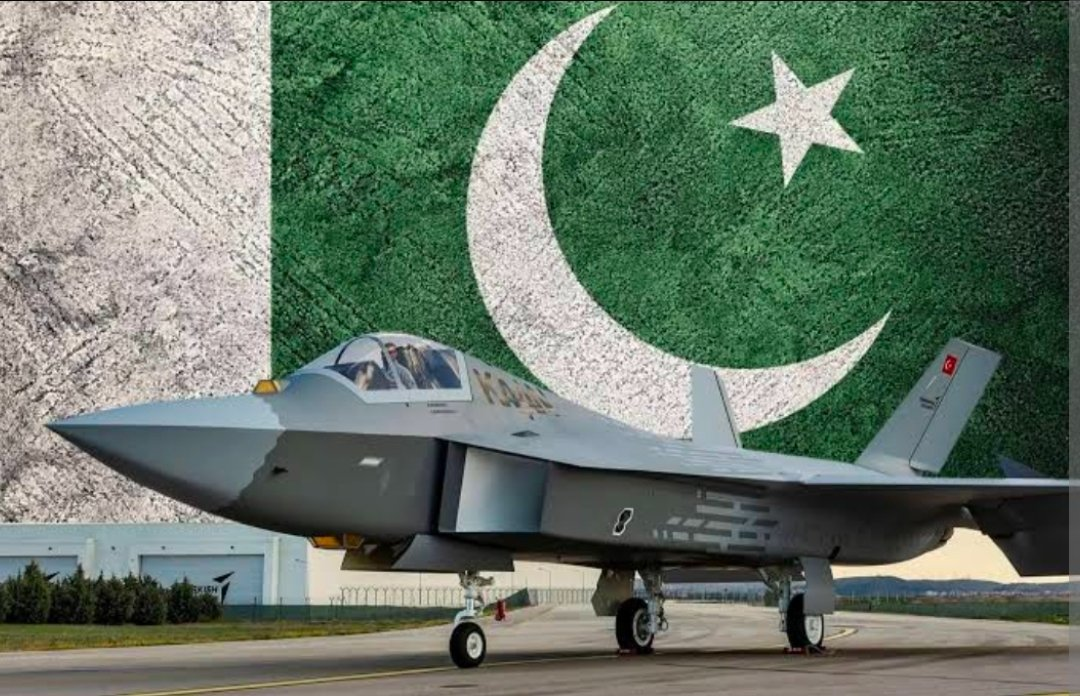
If you’ve been following the drone and missile attacks hitting Saudi airports over the past week, here’s the next layer of this story: Pakistan may now be flying combat missions against the group behind them.
According to The New York Times, a senior Pakistani military official says Pakistani fighter jets are taking part in strikes against Iran-aligned Houthi forces in Yemen. The official spoke on condition of anonymity, citing the sensitivity of the matter.
This isn’t yet an independently confirmed fact, and it’s worth being careful here: Pakistan has repeatedly described its forces in Saudi Arabia as being there in a defensive capacity. But if the report holds up, it marks a real shift in how deep Pakistan is getting pulled into this conflict.
- A Pakistani military source tells The New York Times that Pakistani jets are involved in strikes on Houthi targets in Yemen.
- A second Pakistani official says the focus is mainly on shooting down Houthi drones and missiles, not joining a ground offensive.
- Pakistan has around 8,000 troops, a squadron of mostly JF-17 fighters, and an HQ-9 air-defence system already deployed in Saudi Arabia.
- The reported air role coincides with a Saudi-backed Yemeni offensive near the Bab el-Mandeb Strait.
So what exactly is Pakistan doing in Saudi Arabia?
Pakistan has confirmed its forces are deployed in Saudi Arabia under its defence arrangements with Riyadh, though it hasn’t spelled out every detail of what those forces are doing day to day.
Reuters had previously reported the scale of this deployment: about 8,000 troops, a squadron of fighter jets, and an HQ-9 air-defence system. Sources told Reuters the aircraft involved number around 16, mostly JF-17 fighters, which Pakistan builds jointly with China.
Col. David O. Smith, a former US Army attaché in Pakistan and a former senior analyst with the Defense Intelligence Agency, told The New York Times that the Pakistani contingent includes both Air Force personnel and Army air-defence units. He estimated the troop numbers at around 8,000 and said their main job would likely be protecting Saudi oil facilities and other critical infrastructure, not fighting inside Yemen.
Smith also said he doesn’t expect Pakistani troops to take part in direct ground combat against the Houthis. Part of the reasoning, he said, is that Islamabad wants to keep its relationship with Iran intact, something that would be harder to manage if Pakistani forces were seen fighting Iran’s allies on the ground.
Why would Pakistan fly strike missions but avoid ground combat?
The second Pakistani official quoted by The New York Times drew that same line: Islamabad’s role is expected to centre on countering Houthi drones and missiles through air support, rather than sending troops into Yemen itself.
That distinction matters. Air defence and intercept missions can be framed as protective, aimed at stopping attacks before they land on Saudi soil. A ground offensive inside Yemen is a different kind of commitment, one that pulls Pakistan more directly into a war it has tried to stay at arm’s length from.
Turkey and Pakistan’s wider defence pact with Saudi Arabia was activated as Houthi attacks escalated, and this reported air involvement looks like one of the first visible pieces of that arrangement in action.
What’s happening on the ground in Yemen right now
Saudi-backed Yemeni forces are currently running a major offensive against the Houthis around the Bab el-Mandeb Strait, one of the world’s most important shipping chokepoints. Saudi aircraft are supporting that operation from the air.
This comes on top of a string of Houthi attacks on Saudi airports that we’ve been covering, including strikes that killed three people and injured 36, and a US warning to citizens in Saudi Arabia over further airport threats.
What this means if you’re in Kuwait
For people living here, this is mostly background noise for now, nothing that changes daily life in Kuwait directly. But it’s part of a fast-moving regional picture: more countries’ militaries getting involved in the Red Sea and Gulf security situation, more air defence systems moving around the region, and more uncertainty around flight paths and airports in Saudi Arabia.
If you travel through Saudi airports regularly, or have family flying in and out of them, it’s worth keeping an eye on official advisories rather than assuming things are back to normal.
Quick answers
Is it confirmed that Pakistani jets are striking Houthi targets?
Not independently. The claim comes from one anonymous senior Pakistani military official speaking to The New York Times. Pakistan has publicly described its role in Saudi Arabia as defensive.
How many Pakistani troops are in Saudi Arabia?
Reuters previously reported around 8,000 troops, alongside a squadron of roughly 16 aircraft, mostly JF-17 fighters, and an HQ-9 air-defence system.
Will Pakistan send troops into Yemen itself?
According to the officials cited, that’s not the plan. The expected focus is air support against drones and missiles, not ground combat inside Yemen, partly to avoid damaging Pakistan’s relationship with Iran.
This story is still developing, and the gap between what’s publicly confirmed and what anonymous sources are describing is wide right now. We’ll update this as more details come out.
Source : Arabtimes
📌 Related stories
Latest News
 Local
Housemaid Beaten With Stick, Doused With Chlorine and Left Without Help Dies; Saudi Woman Gets 10 Years
2 Local Woman 10 years jail maid death Read more → 3 Local Kuwait jails 6 for protein supplements, fines KD 45,000 each Read more → 4 International Gulf states ink deal to link region by rail Read more → 5 Local Kuwait tells subscribers in 5 areas to switch to fiber-optic Read more → 6 Local Kuwait plans to turn 7 heritage sites into hotels Read more → 7 Local Kuwait court jails driver for over speeding Read more → 8 International Riyadh on alert by Saudi Civil Defence Read more → 9 Local WhatsApp to stop on some iPhones from 30 November Read more → 10 Local Egyptian singer Ramy Sabry books Kuwait concert for 24 December Read more → 11 Local Video – Kuwait scam alert: fake police now add fake bank staff on video calls Read more → 12 International Hackers spread equivalent of 1.96 billion KWD theft across 10,000 wallets Read more → 13 Local Being an Expat: What Is My Future in Kuwait? Read more → 14 Local Kuwait’s police to get body cameras soon Read more → 15 Local Women no longer need husband’s OK for passports Read more →
Leave a Reply