

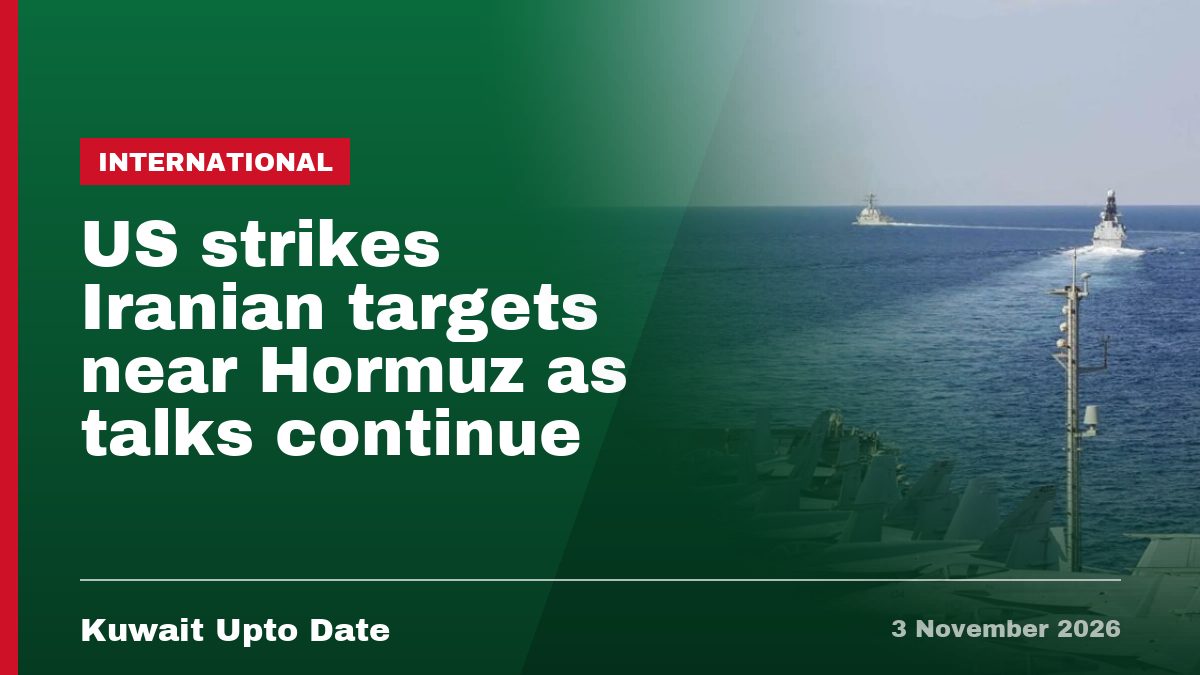
If you’ve been glancing nervously at the news this week, wondering whether things near Kuwait are getting worse again, here’s the short answer: yes, a little, but talks are still going on too.
On Monday, 2 November, the United States carried out what an American official called “limited defensive strikes” against Iranian targets in the Strait of Hormuz, the narrow waterway that a huge share of the world’s oil passes through, right next to Kuwait. Iranian state television reported explosions on Qeshm Island. The US official said the targets were Iranian forces using surface-to-air missiles against American assets. As we reported on Qeshm Island missile strike, the area has already seen rising tension in recent days.
- The US struck Iranian targets near the Strait of Hormuz on 2 November, the day before US midterm elections.
- US Vice President JD Vance said he is cautiously optimistic about a negotiated settlement with Iran.
- Israel’s Prime Minister Benjamin Netanyahu has reportedly pressed President Trump for more strikes once the midterms are over.
- China will send a special envoy to Iran, Oman and Saudi Arabia in early to mid-November.
So what exactly happened?
The official who confirmed the strikes was not authorised to speak publicly, so he spoke to reporters without being named. He described the operation as limited, not a return to full-scale fighting. Still, it’s the first confirmed US military action against Iran since early September, which we covered when the US weighed new Iran strikes before the midterms.
What makes the timing odd is that President Trump had previously said Washington would not attack Iran before Tuesday’s midterm elections. The strikes happened anyway, on the eve of the vote.
Thousands of US troops remain stationed in waters off Iran as part of a naval blockade. That blockade is meant to stop tankers carrying Iranian oil from reaching international buyers. A third US aircraft carrier, with thousands more troops, is also on its way to the region. For background on how this build-up started, see our piece on the US telling Gulf states to brace for possible strikes.
Is there still a chance of a deal?
Yes, and this is the part that’s easy to miss in all the strike headlines. Vance said on Monday that he and Trump were encouraged by the prospects of a negotiated settlement. He said the administration’s key demand is a firm, verifiable promise from Iran not to rebuild its nuclear programme.
Part of the diplomacy includes a letter Vance sent last week to Iran’s security chief, Mohsen Rezaei. The White House shared few details, but Trump said the letter offered Iran medical supplies and other assistance. Rezaei confirmed he received it but said he had not replied yet. He called the shift in Washington’s tone a positive sign, which lines up with what we noted in Iran saying Washington holds the key to avoiding a new war.
Qatari mediators also held two rounds of talks with Iranian officials last week, according to two regional officials. The goal is a framework where Iran stops attacks in the Strait of Hormuz in exchange for the US lifting its blockade on Iranian ports. More talks are planned this week.
Who wants more strikes, and who’s warning against them?
Netanyahu has reportedly pushed Trump for another round of strikes on Iran once the midterms are done, raising it in a phone call over the weekend. Trump did not commit to anything, according to people familiar with the call.
Not everyone in the region wants that. Some US allies in the Middle East have warned that further strikes could destabilise things further, possibly triggering more attacks by Iran-aligned Houthi forces in Yemen against Saudi Arabia and Red Sea shipping, plus a risk that Iran-backed groups in Iraq get pulled in too. At the Manama Dialogue security summit in Bahrain, UAE presidential adviser Anwar Gargash said the gap between US and Iranian positions remains wide, and warned that failing to close it could lead to a worst-case outcome. Egypt’s Foreign Minister Badr Abdelatty said further escalation would be more dangerous and destructive for everyone.
On Iran’s side, Supreme Leader Ayatollah Mojtaba Khamenei told military chiefs that Iran should respond immediately to any threat from the US or Israel, with no geographical limits on targets. Rezaei separately said Tehran wants guarantees that Washington will actually honour any agreement, pointing out that the US and Israel had attacked Iran before while nuclear talks were still ongoing. You can read more on this in our coverage of Iran warning a next war could last even longer.
What this means for people in Kuwait
Kuwait sits close to this whole situation, and the Strait of Hormuz matters directly to everyone here because so much regional oil, and Kuwait’s own exports, move through it. October already recorded the highest number of attacks on commercial vessels in the waterway since March, as Iran tries to pressure Washington into lifting its blockade.
Oil prices actually fell sharply on Monday, as markets reacted to signs of diplomatic progress rather than the strikes themselves. Trump played down the scale of the conflict, saying the US had not been engaged in active fighting for months. For residents and businesses here, that mix of military action and falling oil prices on the same day shows how unpredictable this situation still is.
We’ve covered the build-up to this moment in our explainer on what Iran war tensions mean for people in Kuwait, and in our report on Trump renewing his strike threat as Tehran warns of a longer war. For more on the wider region, visit our international news coverage.
Quick answers
Does this mean full-scale war has started?
No. US officials described Monday’s strikes as limited and defensive, not a resumption of full-scale military operations. Diplomatic talks are continuing alongside the military activity.
Why did China get involved?
China announced it will send a special envoy to Iran, Oman and Saudi Arabia in early to mid-November, joining the wider diplomatic push to avoid further escalation.
Could oil or fuel prices change because of this?
Oil prices fell on Monday on signs of progress in talks, but the situation remains unsettled, and prices could move again depending on what happens with the blockade and negotiations.
This story is still moving, with more Qatar-mediated talks planned this week and a decision from Trump on further strikes still pending. We’ll keep following it. If you’ve noticed any changes in fuel prices or flight bookings because of all this, let us know in the comments.
📌 Related stories
Latest News
 Local
Egyptian singer Ramy Sabry books Kuwait concert for 24 December
2 Local Video – Kuwait scam alert: fake police now add fake bank staff on video calls Read more → 3 International Hackers spread equivalent of 1.96 billion KWD theft across 10,000 wallets Read more → 4 Local Being an Expat: What Is My Future in Kuwait? Read more → 5 Local Kuwait’s police to get body cameras soon Read more → 6 Local Women no longer need husband’s OK for passports Read more → 7 International Earth has a new mini-moon, but it’s leaving by early 2027 Read more → 8 Local Hiring staff you don’t need is a crime Read more → 9 Local Italy honours Sheikha Intisar with top civil award Read more → 10 International Iraq admits its soil used to attack Gulf neighbours Read more → 11 Local Video – New Salmiya waterfront Barayeh Salem place Read more → 12 International Saudi Arabia Arrests 11,587 People in One Week for Visa Breaches Read more → 13 Local US Embassy Kuwait issued a security alert. Read more → 14 International US offers $20 million for one information Read more → 15 International Iran warns Saudi oil plants, Britain could be hit Read more →
Leave a Reply