
If you’re reading this while sitting in Kuwait, you don’t need me to tell you that it’s hot—you can feel it the moment you step toward a window. As we push through June 2026, the mercury isn’t just rising; it’s redefining what “extreme” means. Living here, we’re no strangers to triple-digit temperatures, but this year feels particularly relentless.
When you look at the global heat map, Kuwait consistently sits at the top of the list. But why here? And what does this mean for those of us living in the desert heat?
The Global Heat Index: June 2026 Snapshot
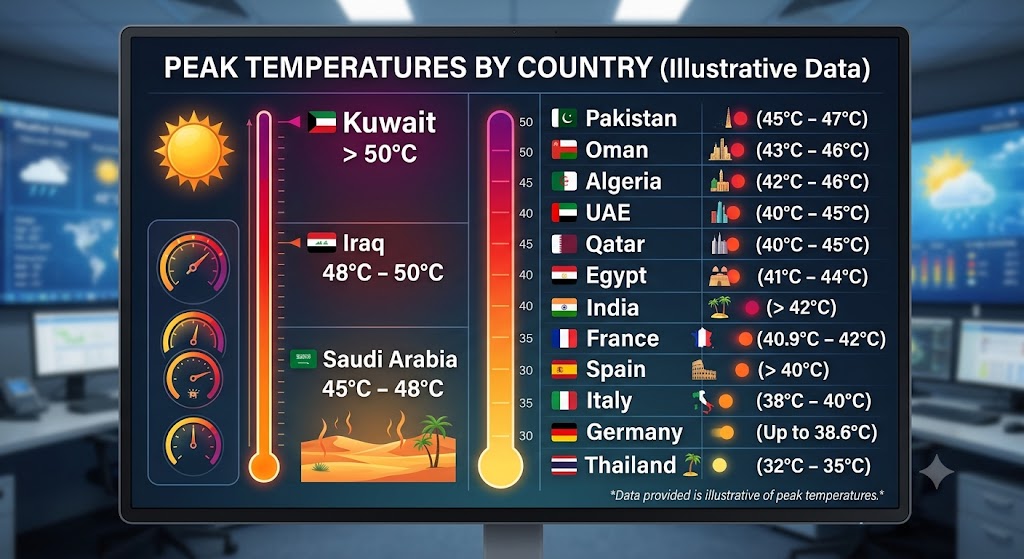
While the world is struggling with unprecedented heatwaves, Kuwait remains the epicenter. Here is how the temperature ranges look globally this June:
| Country | Temperature Range |
| Kuwait | 50°C – 53°C |
| Iraq | 48°C – 50°C |
| Saudi Arabia | 45°C – 48°C |
| Pakistan | 45°C – 47°C |
| Oman | 43°C – 46°C |
| Algeria | 42°C – 46°C |
| UAE | 40°C – 45°C |
| Qatar | 40°C – 45°C |
| Egypt | 41°C – 44°C |
| France | 40.9°C – 42°C |
| India | > 42°C |
| Spain | > 40°C |
| Italy | 38°C – 40°C |
| Germany | Up to 38.6°C |
| Thailand | 32°C – 35°C |
Why is Kuwait the Hottest Spot?
Living in Kuwait, we’re at the mercy of a unique meteorological cocktail. It’s not just “global warming”—it’s geography.
- The “Heat Dome” Effect: We are currently under the influence of persistent high-pressure systems. These create a “heat dome” that traps hot air, prevents cloud formation, and blocks any cooling breezes. Essentially, it turns the country into a giant oven.
- The Semoom Wind: This is the season of the Semoom—dry, hot, northwesterly winds. When these kick up, they don’t just bring heat; they bring dust, which lowers visibility and traps even more heat in the lower atmosphere.
- Urban Heat Island: As our cities grow, our concrete and asphalt structures absorb and retain heat throughout the day, releasing it slowly at night. This is why even when the sun goes down, you don’t get the relief you’d expect; the ground is still radiating heat back at us.
- Aridity: With almost zero rainfall and extremely low humidity during the day, there is nothing to “moderate” the temperature. The sun’s radiation hits the desert floor directly, heating the air instantly.
Why people dying in europe because of heat ?
In Kuwait, the environment is built to handle extreme heat because it’s a constant reality. In Europe and the UK, these temperatures are an “emergency,” not a standard season. Here is why the impact is so starkly different:
1. Lack of Cooling Infrastructure
- Built for Cold, Not Heat: European homes and public buildings are historically designed to trap heat for the long, cold winters. Many buildings have thick walls, poor cross-ventilation, and, most crucially, very little air conditioning. Estimates suggest less than 20% of European homes have AC.
- The “Heat Trap” Effect: When temperatures soar, European homes act like ovens that cannot cool down at night. In Kuwait, air conditioning is a standard utility. In Europe, many people have no way to lower their indoor temperature, meaning they never get a “cool break” to recover from the heat.
2. The “Surprise” Factor & Lack of Acclimatization
- No Time to Adjust: Kuwaitis are physiologically and behaviorally acclimated to the heat. People know the “rhythm” of the summer—when to stay inside, how to dress, and how to manage hydration.
- Sudden Shock: In Europe, a heatwave often hits suddenly. The public, the healthcare system, and the elderly don’t have time to transition their behavior, leading to a massive, sudden surge in hospitalizations for heatstroke and cardiovascular stress.
3. Aging Populations
- Demographic Vulnerability: Europe has a much older population than the Gulf. Over 20% of the EU population is aged 65 or older. Elderly individuals have a reduced physiological capacity to regulate body temperature and are more likely to have chronic health conditions that make them highly susceptible to heat-related organ failure.
4. Humidity and “Feels-Like” Temperatures
- The Cooling Gap: While Kuwait is incredibly hot, it is often very dry, which makes sweating an effective way to cool the body. Many European heatwaves, especially in regions with coastal proximity, are humid. High humidity prevents sweat from evaporating, which stops the body’s primary natural cooling mechanism. This creates a higher “Wet Bulb Globe Temperature” (WBGT), which is a much more dangerous metric for human health than the air temperature alone.
5. Urban Heat Island Effect
- Design Limitations: Many European cities are dense, ancient, and filled with stone and concrete that absorb heat all day and release it at night. Unlike modern Gulf cities, which were planned in the era of high-capacity climate control, many historic European city centers are essentially “traps” for heat, with limited green spaces to provide natural cooling.
The Bottom Line
In Kuwait, the heat is a known challenge that the entire society is engineered to mitigate. In Europe, the heat is an infrastructure failure—when the environment itself doesn’t offer a safe place to cool down, even “lower” temperatures of 38°C to 40°C become fatal for the most vulnerable.
Latest Posts
- How AI Is Starting to Change Jobs in Kuwait, and What to Do About It

- How to Apply for a Kuwait Visa: Who Qualifies and What You Need

- Al Shaheed Park’s Huge New Phase Opens 1 October with Ice Rink, Karting
- Be careful while shopping at the Friday Market.

- Kuwait’s New Salary System

- MG Opens Huge New Showroom in Shuwaikh, One of the Biggest in the World

- Elissa Is Finally Back in Kuwait – Concert Set for October 2

- Not allowed to carry bags of others at Kuwait Airport

- Europe Sets Clear Rules for Schengen Visa Applications – Here’s How to Apply

- Kuwait’s Stray Dog Problem: Why the Laws Exist but Aren’t Working

📌 Related stories



⭐ Get Kuwait Upto Date first on Google.
Add us as a preferred source and see our news more in Google’s Top Stories.
Latest News
 Local
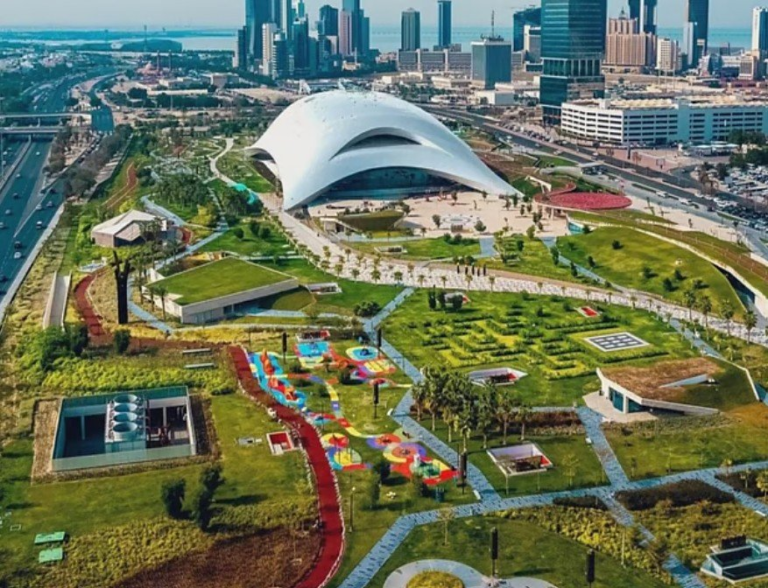
Al Shaheed Park’s Huge New Phase Opens 1 October with Ice Rink, Karting
Local
Al Shaheed Park’s Huge New Phase Opens 1 October with Ice Rink, Karting
 2
Local Be careful while shopping at the Friday Market.
Read more →
2
Local Be careful while shopping at the Friday Market.
Read more →
 3
Local Kuwait’s New Salary System
Read more →
3
Local Kuwait’s New Salary System
Read more →
 4
Local MG Opens Huge New Showroom in Shuwaikh, One of the Biggest in the World
Read more →
4
Local MG Opens Huge New Showroom in Shuwaikh, One of the Biggest in the World
Read more →
 5
Local Elissa Is Finally Back in Kuwait – Concert Set for October 2
Read more →
5
Local Elissa Is Finally Back in Kuwait – Concert Set for October 2
Read more →
 6
Local Not allowed to carry bags of others at Kuwait Airport
Read more →
6
Local Not allowed to carry bags of others at Kuwait Airport
Read more →
 7
Local Europe Sets Clear Rules for Schengen Visa Applications – Here’s How to Apply
Read more →
7
Local Europe Sets Clear Rules for Schengen Visa Applications – Here’s How to Apply
Read more →
 8
Local Kuwait’s Stray Dog Problem: Why the Laws Exist but Aren’t Working
Read more →
8
Local Kuwait’s Stray Dog Problem: Why the Laws Exist but Aren’t Working
Read more →
 9
International Jeddah Tower Passes Petronas Height, Still Not Halfway Done
Read more →
9
International Jeddah Tower Passes Petronas Height, Still Not Halfway Done
Read more →
 10
International Visit Visa Extension: What Kuwait Travellers Should Know
Read more →
10
International Visit Visa Extension: What Kuwait Travellers Should Know
Read more →
 📲 Get the Kuwait Upto Date app