

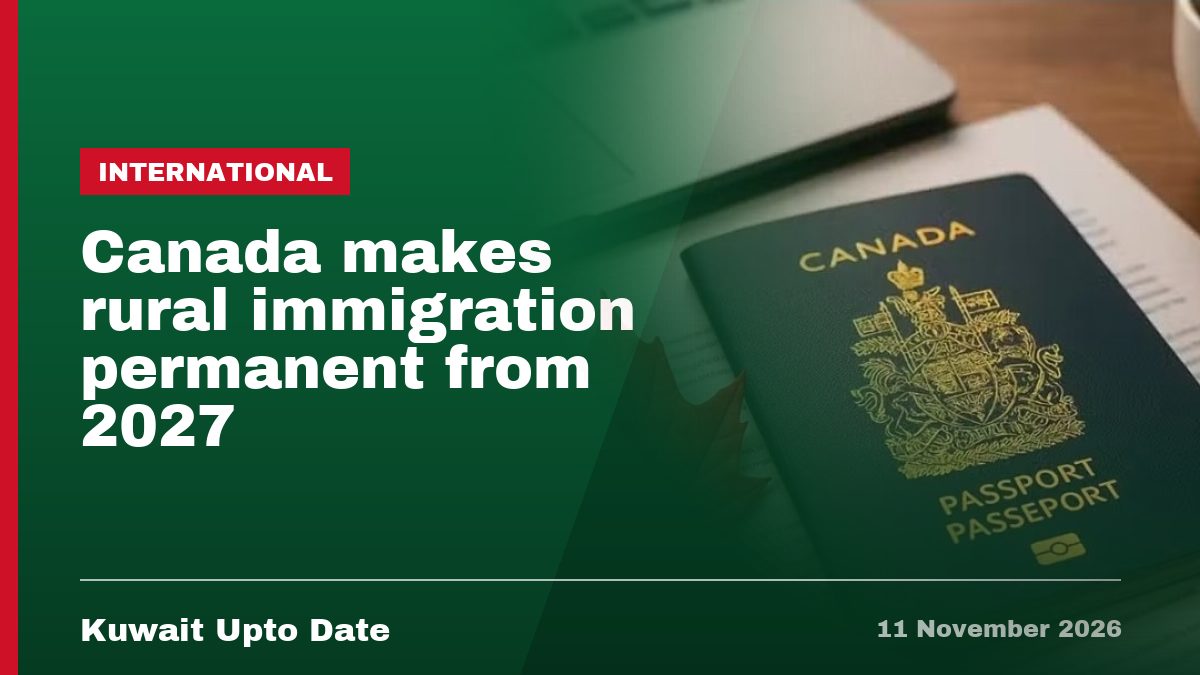
Canada is turning a temporary immigration trial into a permanent law, starting 1 January 2027.
If you’re a skilled worker or recent graduate dreaming of settling in Canada, this is worth a careful read. The Rural Community Immigration Pilot (RCIP), which started in 2025 as a temporary test programme, is becoming a permanent part of Canada’s immigration system. It’s a different route from the usual points-based system, and it could matter to Kuwait residents weighing their options, including those who followed our earlier piece on Canada’s new points for high wage earners.
- Canada’s Rural Community Immigration Pilot (RCIP) becomes a permanent program from 1 January 2027.
- It covers 14 communities across six provinces, with more locations planned but not yet named.
- Canada aims to admit 5,500 permanent residents through this route in 2027.
- Applicants need a job offer, a community recommendation, and to meet education, work experience, language, and settlement fund requirements.
What exactly is changing?
Canada’s Immigration Minister, Lena McKeigue Diab, confirmed the shift. The RCIP was launched in 2025 as a pilot, meaning it was always meant to be tested and reviewed. Now the government has decided it works well enough to keep permanently.
The goal, according to the minister, is to fix labour shortages in rural areas by bringing in skilled workers who are willing to live and work outside Canada’s big cities. It’s a trade Canada has made before: smaller towns get workers they badly need, and newcomers get a real path to permanent residency, something that’s often harder to get through Canada’s bigger city-based programmes.
Who can apply, and what do you need?
The program isn’t open to just anyone with a Canadian job offer. You need several things lined up at once.
- A job offer from an employer that has been approved under the program.
- A recommendation from one of the participating communities.
- Proof you meet the required education level.
- Enough relevant work experience.
- A minimum level of English or French language ability.
- Enough settlement funds to support yourself when you arrive.
These are the same broad categories most Canadian economic immigration routes ask for, but the community recommendation step is what makes this pilot different. It’s not just about your skills on paper, it’s also about a specific town or region deciding it wants you.
Which communities are involved?
Right now, the pilot covers communities in Nova Scotia, Ontario, Manitoba, Saskatchewan, Alberta, and British Columbia. The government says it plans to add more locations later, but hasn’t named them yet. If you’re seriously considering this route, it’s worth checking the official list regularly, since new communities could open up fresh job categories and quotas.
How many people get in, and how fast is this growing?
Canada’s 2025-2027 Immigration Levels Plan sets a target of 5,500 permanent residents through this pathway in 2027. That compares with 6,000 admitted in 2025 and a planned 6,300 in 2026, according to the same plan. It’s not yet clear why the 2027 target is lower than the two previous years, so that’s worth watching as more details come out.
The pilot has already shown real movement. More than 1,500 newcomers and their family members have been admitted so far. Between January 2025 and August 2026, over 1,950 employers were approved to hire through the scheme, and more than 4,700 job offers and community recommendations were issued in that period. These numbers suggest the program has built real momentum even before becoming permanent.
What about work permits while you wait?
Permanent residency applications take time to process anywhere in the world, and Canada is no different. To bridge that gap, eligible foreign workers under this pilot may qualify for a two-year, employer-specific work permit while their permanent residency paperwork moves through the system.
There’s a family benefit too. Spouses or common-law partners of applicants may qualify for open work permits, letting them work for any employer within the participating community, not just one employer. That’s a meaningful detail for families planning a move together rather than sending one person first.
Applications already submitted under the pilot’s temporary phase will keep being processed as the program shifts to its permanent structure in January 2027. The government hasn’t said applicants need to resubmit anything.
What this means if you’re in Kuwait
For skilled workers and graduates currently in Kuwait, Article 18 and other work visa holders included, this pathway is one more door into Canada, separate from the main federal points system many people already track. It particularly suits people open to living outside major cities like Toronto or Vancouver, since the whole point of the pilot is filling gaps in smaller communities.
It won’t suit everyone. You need a specific job offer tied to an approved employer and a community willing to recommend you, so it’s not a general-purpose visa. But for construction workers, healthcare staff, tradespeople and other skilled professions often in demand in rural Canada, it’s worth researching the approved employer list for your field. Readers can also check our latest international news for related immigration changes affecting Gulf residents.
Quick answers
Does this pathway replace Canada’s main immigration system?
No. It runs alongside Canada’s other permanent residency programmes, as one extra option focused on rural communities.
Can I apply without a job offer?
No. The source material confirms you need both a job offer from an approved employer and a recommendation from a participating community.
Will more communities be added?
Canada’s government says it plans to expand the pilot to additional locations, but hasn’t named them yet. Check official channels for updates.
What happens to applications already in the system?
They’ll keep being processed as normal while the program becomes permanent from January 2027.
If you’ve looked into this pilot or know someone who has gone through it, share your experience in the comments. It could help someone else in Kuwait weighing the same decision.
📌 Related stories
Latest News
 International
New Covid variant PJ.2.1 spreads worldwide
2 International Lahore tops pollution because of Diwali in India Read more → 3 Local Sahel app now sends you entry and exit notifications Read more → 4 International Ebola outbreak now ranks second-worst ever Read more → 5 International Student killed in flat-tyre roadside crash Read more → 6 International Video – Abaya fashion show video goes viral Read more → 7 Local Kuwait ports arrest 67 wanted people in October sweep Read more → 8 Local Kuwait to add Chinese language to secondary school Read more → 9 International US 71% poll shows support for ending war and Trump tariffs Read more → 10 Local New Kuwait family law Read more → 11 International Video – Entire family dies as hot air balloon catches Read more → 12 Local You may run freelance work without an office in Kuwait Read more → 13 Local GCC defence chiefs approve military command base in Kuwait Read more → 14 International Jobs in NASA, Salary : 50,000.000 KWD a year Read more → 15 International Nvidia sheds $193 billion after CEO Jensen Huang scandal Read more →
Leave a Reply