

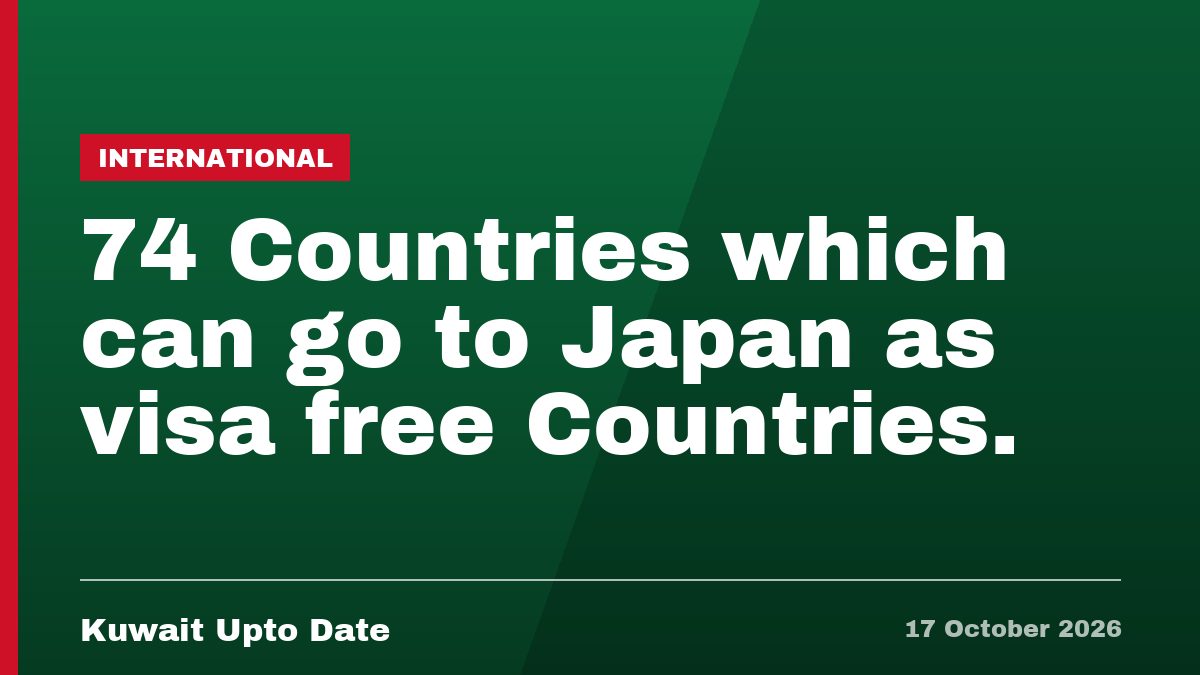
If you’re an expat in Kuwait thinking about a holiday in Tokyo or Osaka, check your passport before you book anything. Japan has just reconfirmed a list of 74 countries and regions whose citizens can enter without a visa – and neither Kuwait nor most of the nationalities living here are on it.
That doesn’t mean a trip to Japan is off the table. It just means you’ll need to plan ahead and sort out a visa first, rather than turning up at Narita or Kansai airport and walking through on your passport alone.
- Japan allows visa-free entry for people holding passports from 74 countries and regions, including the US, UK, most of the EU, Australia, Canada, Singapore, South Korea and the UAE.
- Kuwait is not on the list, so Kuwaiti passport holders still need a visa to enter Japan.
- Stays allowed without a visa run from 15 to 90 days depending on the country, not forever – so this is about short tourist or business trips, not relocation.
- Several countries on the list only qualify if the traveller holds a modern ePassport or machine-readable passport, so the rule isn’t automatic even for eligible nationalities.
Who exactly gets to skip the Japanese visa?
The 74 countries and regions span every continent. In Asia, that’s Brunei, Indonesia, Malaysia, South Korea, Singapore, Thailand, Hong Kong, Macao and Taiwan. North America covers Canada and the United States. Oceania means Australia and New Zealand.
From the Middle East, only Israel, Qatar, Türkiye and the United Arab Emirates appear on the list. Latin America and the Caribbean contribute a long list too – Argentina, the Bahamas, Barbados, Brazil, Chile, Costa Rica, the Dominican Republic, El Salvador, Guatemala, Honduras, Panama, Paraguay, Peru, Mexico, Suriname and Uruguay.
Europe makes up the biggest chunk of the list: Andorra, Austria, Belgium, Bulgaria, Croatia, Cyprus, Czech Republic, Denmark, Estonia, Finland, France, Germany, Greece, Hungary, Iceland, Ireland, Italy, Latvia, Liechtenstein, Lithuania, Luxembourg, Malta, Monaco, Montenegro, Netherlands, North Macedonia, Norway, Poland, Portugal, Romania, San Marino, Serbia, Slovakia, Slovenia, Spain, Sweden, Switzerland and the United Kingdom. Africa adds Lesotho, Mauritius and Tunisia.
Kuwait sits outside all of these groupings. So do most of the nationalities that make up Kuwait’s resident population – Indian, Egyptian, Filipino, Bangladeshi, Sri Lankan, Nepali, Jordanian, Syrian and Pakistani passport holders all still need to apply for a Japanese visa in advance, regardless of where they live.
What this actually means if you live in Kuwait
If you hold a Kuwaiti passport, this changes nothing for you day to day, but it does mean you can’t treat Japan like a spontaneous weekend trip the way you might with some Schengen countries Kuwait is edging closer to visiting visa-free. You’ll need to go through Japan’s standard visa application process before you fly.
If you’re an expat in Kuwait holding a passport from one of the 74 listed countries or regions – say a British, American, Australian, Singaporean, Emirati or South Korean passport – you can generally enter Japan visa-free for tourism or business, as long as your passport meets the technical requirements explained below. Your country’s visa-free status travels with your passport, not with your Kuwaiti residency.
If you hold a passport from a country not on the list – which covers the large majority of expats working in Kuwait – you’ll need to apply for a Japanese visa through the relevant embassy or consulate before travelling, exactly as you would for any other non-exempt destination.
How long can you actually stay?
The visa-free period isn’t the same for everyone. Most countries and regions on the list get 90 days. Indonesia and Thailand are capped at 15 days. Brunei and Qatar get 30 days. These are short-stay allowances for tourism or business, not residency, and overstaying would put you in breach of Japanese immigration rules.
The fine print: not every passport from a listed country qualifies automatically
Several of the exemptions come with conditions attached, so it’s worth checking carefully even if your nationality is on the list.
- Indonesian nationals only qualify if they’ve registered an ICAO-compliant ePassport with a Japanese diplomatic mission in Indonesia, valid for three years or until the passport expires.
- Nationals of Montenegro, Peru, Paraguay, Panama, Brazil, the United Arab Emirates, Thailand and Serbia need an ICAO-standard ePassport. Without one, they must get a visa in advance or risk being refused entry.
- Malaysian nationals need the same ICAO-standard ePassport; without it, entry will be strictly examined and may be refused.
- Taiwan’s exemption only applies to passport holders with a personal ID number.
- Hong Kong citizens need a Special Administrative Region passport or a British National Overseas passport with the right of residence in Hong Kong.
- Macao citizens need an SAR passport issued by the Macao Special Administrative Region.
- Nationals of Barbados, Türkiye and Lesotho need a Machine-Readable Passport compliant with ICAO standards; without one, they’re advised to get a visa in advance.
The source list also flags additional notes for countries including Austria, Germany, Ireland, Liechtenstein, Mexico, Switzerland and the UK (Note 8), plus separate notes for Qatar and Uruguay, but the exact wording of those conditions wasn’t included in the material we had – worth confirming directly with the Japanese embassy before you travel if you hold one of those passports.
For more on visa-free arrangements changing across the region, see our coverage of the Oman-Pakistan visa exemption deal and our guide to applying for a Schengen visa, which walks through a similar advance-application process.
Quick answers
Can Kuwaiti citizens enter Japan without a visa?
No. Kuwait is not among the 74 countries and regions on Japan’s visa-exemption list, so Kuwaiti passport holders need to apply for a visa before travelling.
Does holding Kuwaiti residency help expats skip Japan’s visa requirement?
No. Visa-free entry to Japan depends on your passport’s nationality, not where you live or work. An expat in Kuwait holding a passport from a listed country can travel visa-free; one holding a non-listed passport cannot, regardless of Kuwaiti residency status.
How long can visa-exempt travellers stay in Japan?
It depends on nationality: 15 days for Indonesia and Thailand, 30 days for Brunei and Qatar, and 90 days for all other listed countries and regions.
Do UAE passport holders need a visa for Japan?
UAE nationals have been visa-exempt since November 2022, but only if they hold an ICAO-compliant ePassport. Those without one still need to apply for a visa in advance.
If you’re planning a trip to Japan from Kuwait, the smartest move is simply checking your passport’s nationality against this list and sorting your visa application early – Japan’s consulates can take time to process, and there’s no point finding out the rules the day before your flight. For more on who gets visa-free travel and who doesn’t, see our latest international travel news.
📌 Related stories



Latest News
 International
Woman’s Cat Vanishes at Airport, Still Not Found After 5 Days
International
Woman’s Cat Vanishes at Airport, Still Not Found After 5 Days
 2
International What Saudi Arabia’s Latest Visa Crackdown Means
Read more →
2
International What Saudi Arabia’s Latest Visa Crackdown Means
Read more →
 3
International Nicole Amor, killed in Kuwait
Read more →
3
International Nicole Amor, killed in Kuwait
Read more →
 4
Local Iowa soldier among six US troops killed at Kuwait’s Shuaiba port
Read more →
4
Local Iowa soldier among six US troops killed at Kuwait’s Shuaiba port
Read more →
 5
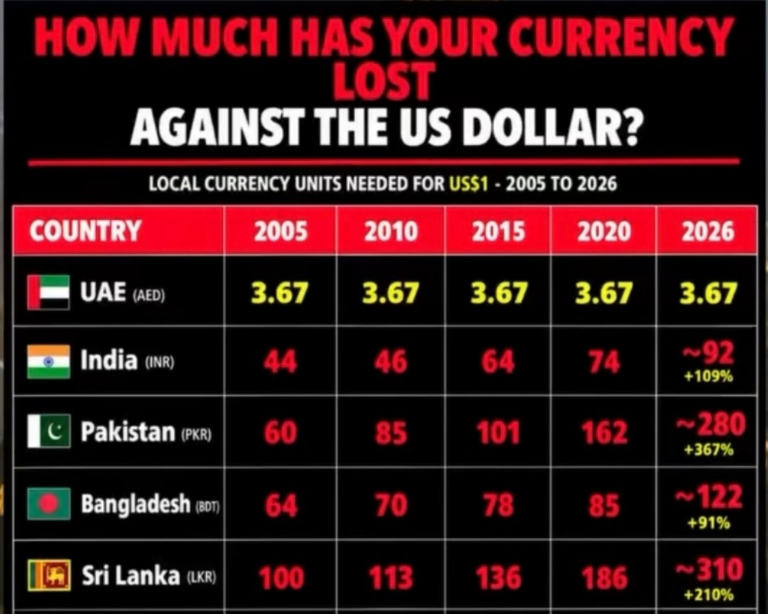
International How much has your currency lost against the US dollar?
Read more →
5
International How much has your currency lost against the US dollar?
Read more →
 6
International India: Minimum Salary Level for Employment Visas Significantly Increased
Read more →
6
International India: Minimum Salary Level for Employment Visas Significantly Increased
Read more →
 7
International Roundabout Now a Signal, Cuts Travel Time 50%
Read more →
7
International Roundabout Now a Signal, Cuts Travel Time 50%
Read more →
 8
Local Indian families in Kuwait left without water
Read more →
8
Local Indian families in Kuwait left without water
Read more →
 9
Local 17 Arrested in Kuwait’s 5 stars Hotel
Read more →
9
Local 17 Arrested in Kuwait’s 5 stars Hotel
Read more →
 10
International Two Bangladeshis held over indecent act inside Makkah mosque
Read more →
10
International Two Bangladeshis held over indecent act inside Makkah mosque
Read more →
 11
Local Kuwait Scam: One App Approval Wipes Out Bank Balance
Read more →
11
Local Kuwait Scam: One App Approval Wipes Out Bank Balance
Read more →
 12
Local Employer Not Paying Your Indemnity? Here’s What to Do
Read more →
12
Local Employer Not Paying Your Indemnity? Here’s What to Do
Read more →
 13
Local Karen Wazen x Joe & The Juice Drop a Silver Sandwich Collab
Read more →
13
Local Karen Wazen x Joe & The Juice Drop a Silver Sandwich Collab
Read more →
 14
International Tesla Roadster With Rocket Thrusters: Price, Specs and 2028 Launch
Read more →
14
International Tesla Roadster With Rocket Thrusters: Price, Specs and 2028 Launch
Read more →
 15
Local Convert Visit Visas to Residency for KD 150
Read more →
15
Local Convert Visit Visas to Residency for KD 150
Read more →
Leave a Reply