

Understanding Kuwait’s Deportation Laws
Living and working in the Gulf is a massive opportunity, but let’s be honest: you are always one major regulatory one step away from having your residency turned upside down.
Lately, I’ve been digging deep into the actual mechanics of Kuwait’s immigration laws. With the Ministry of Interior’s aggressive push toward total compliance and biometric logging, I wanted to understand the ground reality behind a question that constantly floods expat forums.
I spent time pulling apart the local legal frameworks, looking past the official government , and talking to people on phones who know how the system operates on the ground. Here is exactly what my research turned up.
How many kinds of deportations are there in Kuwait?
Kinds of Deportation in Kuwait
There are two main kinds of deportations in Kuwait:
1. administrative deportation
Administrative deportation is issued directly by the Ministry of Interior for residency, visa, or labor violations without a court trial.
2. judicial deportation.
Judicial deportation is mandated explicitly by a judge following a criminal conviction under Kuwaiti law.
1. Administrative Deportation (The Quick Exit)
This is essentially an exclusion order handled entirely by the Ministry of Interior (MOI). It doesn’t involve a courtroom, a defense lawyer, or a long-drawn-out legal battle.
- How people land here: Usually, it’s a strict labor or residency violation. Think overstaying the grace period on your visa, getting caught working for an employer who isn’t your official legal sponsor (a massive violation under the Kafala system), or having a company slap an “absconding” report on your file. Surprisingly, severe traffic offenses or things deemed public order disruptions can trigger this too.
- The Important Point: Because this is an administrative tool tied to protecting public interest and national security, the authorities have the power to execute it incredibly fast. Most probably, two policemen will arrest you and you will not get chance to call your lawyer for bail or to call your sponsor or your friends, and most of the times many deportees even they couldnt inform their family that they are being deported until they reach to airport (after checked in) or to their home country.
2. Judicial Deportation (The Legal Verdict)
This is an entirely different beast. This order is handed down explicitly by a judge in a criminal courtroom.
- How people land here: It’s the direct result of a criminal conviction. If an expat is found guilty, the judge will almost always tag a mandatory deportation order onto the end of the prison sentence.
- The Catch: This isn’t just a regulatory flag; it’s a permanent criminal record tied directly to your identity.
Inside the MOI System: Why Changing Your Passport Doesn’t Work
A lot of old-school forum advice claims you can just wait a bit, get a new passport with a slight name variation back home, and fly right back into Kuwait.
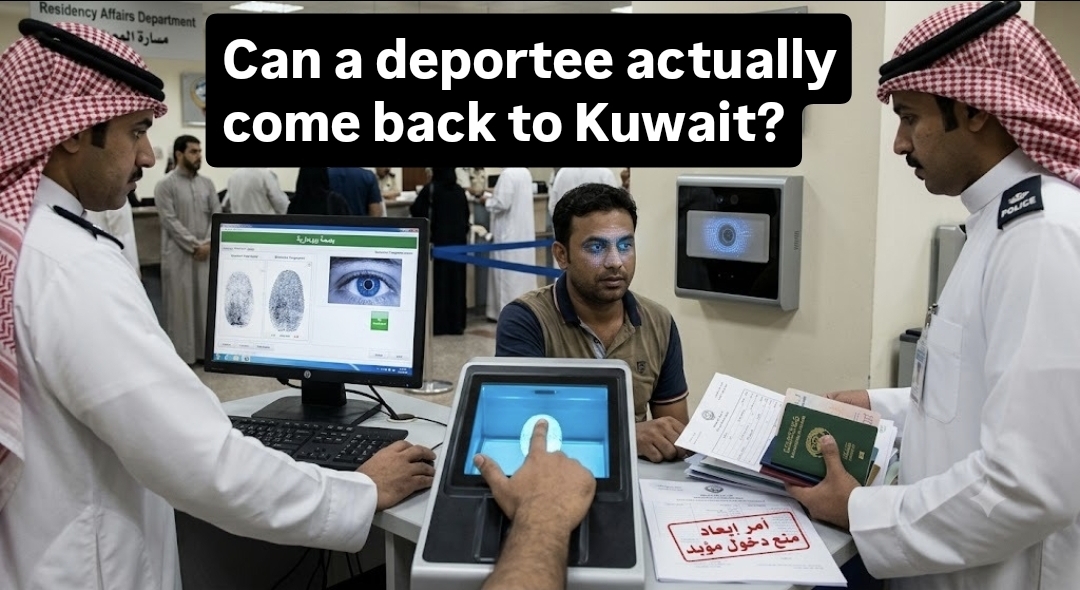
My research proved that those days are officially over. Kuwait has fully integrated its Biometric Fingerprint System and Iris Scan (The “Eye Scan”). The moment you are processed out of the country, your facial data and fingerprints are permanently locked into the MOI’s central blacklist. Because border control scans every single traveler upon arrival, any attempt to bypass a ban will immediately trigger an identity match and lead to instant detention.
What is the process to come back to Kuwait for a deportee?
Process to Return to Kuwait After Deportation
- Verify the ban status: The sad part, there is not any online portal to check the status of ban, so you need to hire a Kuwaiti attorney to check the Ministry of Interior database to determine if the ban is temporary or permanent. Since you are not in Kuwait then you have to give POA to someone to talk with lawyer on your behalf.
- Clear outstanding liabilities: Settle all remaining immigration fines, civil debts, or absconding charges through a legal representative, which include the pending bills and installments related to your phone or other related gadgets.
- Secure a Kuwaiti sponsor: Find a legitimate local employer willing to formally petition the government on your behalf.
- Submit an MOI waiver application: Have your sponsor file a formal request with the Residency Affairs department to lift your name from the blacklist. Then further MOI will guide your new sponsor that how to lift the ban. Most probably they will ask you to get the signature on Non Objection Certificate of existing Ministry of Interior or approach court to lift the name from ban list,
- Apply for a new entry visa: Once approved, complete the standard medical tests, biometric processing, and embassy clearances from your home country, and welcome back to Kuwait.
So, can you actually come back? The short answer: It is an incredibly battle, but for specific administrative cases, a sliver of hope exists. If you are trying to help someone navigate the system from the outside, following that structured workflow is the only realistic way forward.
Duration of Ban ?
I couldnt confirm the duration of ban, as it is case by case, before it was from 3 to 5 years but recenlty i have heard that it is for lifetime, but it is not official yet,
A Final Warning on “Fixer” Scams
If there’s one major takeaway from my research, it’s this: the internet is absolutely crawling with predatory scams targeting desperate people. You will see endless “agents” on social media promising they can “clear a biometric record” or “erase an MOI file” if you pay them thousands of Dinars up front.
Let’s be completely real: nobody has a back-door key to an encrypted, biometric government database. The only real way back is through official, transparent legal channels, a legitimate sponsor, and the formal signature of the Ministry of Interior.
If you or a family member are dealing with this, ignore the internet shortcuts. Get a certified local attorney to pull the original deportation order, look at the hard facts, and handle it the right way.
Drop your thoughts or questions in the comments below—let’s talk.
📌 Related stories




Latest News
 Local
Transfer your money in seconds
Local
Transfer your money in seconds
 2
International world’s first 24-carat gold walking path.
Read more →
2
International world’s first 24-carat gold walking path.
Read more →
 3
International What the New US Travel Advisory for Saudi Arabia and UAE
Read more →
3
International What the New US Travel Advisory for Saudi Arabia and UAE
Read more →
 4
International What Trump’s latest Iran strike warning mean.
Read more →
4
International What Trump’s latest Iran strike warning mean.
Read more →
 5
Local Fake Germany job offer costs Hawally woman KD 1,000
Read more →
5
Local Fake Germany job offer costs Hawally woman KD 1,000
Read more →
 6
Local 8,849 Kuwait firms flagged over late salary payments
Read more →
6
Local 8,849 Kuwait firms flagged over late salary payments
Read more →
 7
International Russia in talks with Kuwait on visa-free travel deal
Read more →
7
International Russia in talks with Kuwait on visa-free travel deal
Read more →
 8
International USA Loaded missiles on warships against Iran
Read more →
8
International USA Loaded missiles on warships against Iran
Read more →
 9
Local Kuwait arrests 3 for hiding e-cigarettes in food deliveries to teens
Read more →
9
Local Kuwait arrests 3 for hiding e-cigarettes in food deliveries to teens
Read more →
 10
Local Jazeera Airways surprises passengers with mid-air orchestra show
Read more →
10
Local Jazeera Airways surprises passengers with mid-air orchestra show
Read more →
 11
International 5 new K-dramas Kuwait is streaming now: from Make Me Tingle to Doctor X
Read more →
11
International 5 new K-dramas Kuwait is streaming now: from Make Me Tingle to Doctor X
Read more →
 12
International Trump threatens new Iran strikes
Read more →
12
International Trump threatens new Iran strikes
Read more →
 13
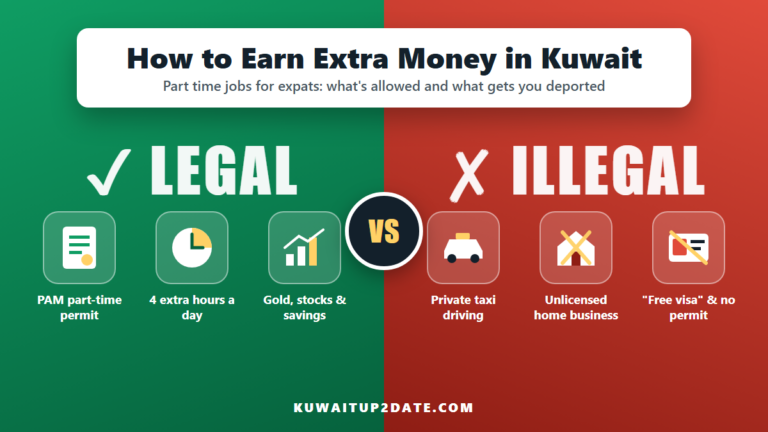
Part Time Job in Kuwait: How to Earn Extra Money Legally (2026 Expat Guide)
Read more →
13
Part Time Job in Kuwait: How to Earn Extra Money Legally (2026 Expat Guide)
Read more →
 14
Local Two Sri Lankan women found dead, the mysterious case
Read more →
14
Local Two Sri Lankan women found dead, the mysterious case
Read more →
 15
Local Life in Kuwait for the Filipino community: what to know
Read more →
15
Local Life in Kuwait for the Filipino community: what to know
Read more →


5 responses to “Can a deportee actually come back to Kuwait?”
If aa traffic viloten case have can come back
If aa traffic viloten case have can come back and how will it do
Dear Sir / Madam
I am Saroj Tamang I am leaving long
time in Kuwait 2019-06-29 I don’t have any problems crime problem no reason why deport me I have my previous employee give release me when I join new come promise me to transfer visa I am just 1 week start new work November 29 -2025 for me black day with without reason they put me jail they keep me November 29 to January 06 they keep me jail January 07 deport me airport I was treated very unfairly in prison. Please tell me whether I will be allowed to come to Kuwait in the coming days or not. What is the use of this?
Regarding- Saroj Tamang
Phone Number – +96550863258
Job
Wow, fantastic blog layout! How long have you been blogging for?
you made blogging look easy. The overall look of your web site is wonderful, let alone the content!