


In a bold move to tackle the growing crisis surrounding youth mental health and digital safety, Malaysia has officially started enforcing a groundbreaking ban. As of today, children under the age of 16 are legally prohibited from owning social media accounts.
Malaysia is drawing a hard line in the digital sand, joining a rapidly growing global movement of countries trying to wrestle control of the internet back from Silicon Valley tech giants.
Here is everything you need to know about how the ban works, who is getting penalized, and why the tech industry is already pushing back.
The New Rules of the Game
The law targets the heavy hitters. Any platform with more than 8 million users in Malaysia—including TikTok, Instagram, Facebook, and YouTube—must comply.
Under the new regulations, these platforms are legally required to:
- Deploy Age-Verification Systems: They must build robust mechanisms to prove users are at least 16 before letting them create an profile.
- Adopt “Safety-by-Design”: Apps must strip away predatory, manipulative design features (like infinite scrolls and hyper-aggressive algorithms) engineered to keep kids hooked.
- Nuke Underage Accounts: Platforms must actively scrub existing accounts belonging to children under 16.
What are the stakes?
The government isn’t playing around. Social media companies that fail to lock out underage users face staggering fines of up to 10 million ringgit (roughly $2.5 million USD).
Interestingly, the law leaves parents out of the line of fire. If a clever 14-year-old manages to bypass the security blocks and sneak onto TikTok, the parents will not face legal penalties or fines—the burden of enforcement rests entirely on the tech companies.
Why Now? Protection vs. Regulation
According to Malaysia’s Communications and Multimedia Commission, the goal isn’t to lock kids out of the modern digital world or restrict educational internet use. Instead, it’s about establishing an age-appropriate safety net. The government wants to shield young brains from cyberbullying, explicit content, and the compulsive, addictive behaviors driven by current platform designs.
Regulators hope these measures will offer peace of mind to exhausted parents struggling to manage their kids’ screen time in an increasingly complex digital landscape.
“These measures help strengthen the protection of children in the online environment, while providing added reassurance to parents in navigating increasingly complex digital risks.” — Malaysia’s Communications and Multimedia Commission
While tech platforms are being given a brief grace period to get their age-verification systems up and running, they have yet to reveal the exact technology they will use to police these virtual borders.
The Big Tech Pushback: Will It Backfire?
Unsurprisingly, social media giants are skeptical. Tech companies argue that flat-out bans rarely work and often trigger unintended consequences.
Clara Koh, Meta’s Director of Public Policy for Southeast Asia, previously warned that a blanket ban for under-16s could actually drive teenagers away from heavily moderated, mainstream apps. The fear? Kids will simply migrate to unregulated, darker corners of the web where safeguards don’t exist at all.
Meta has pushed back by highlighting its own internal solutions, such as their recently launched “Teen Accounts,” which automatically restrict screen time, limit exposure to sensitive content, and block random adults from messaging minors.
A Global Domino Effect
Malaysia is far from alone in this fight. This policy drops amidst massive global momentum to hold tech companies legally accountable for how their algorithms affect kids.
The pressure on these platforms is financial, too. Just recently, a US jury ordered Meta and YouTube to pay millions in damages after a lawsuit successfully argued that the platforms’ addictive design features directly contributed to psychological harm suffered by a young user.
As Malaysia rolls out this massive experiment, the rest of the world will be watching closely to see if a legal ban can truly stop the scroll—or if tech-savvy kids will simply find a workaround.
📌 Related stories




Latest News
 International
Nicole Amor, killed in Kuwait
International
Nicole Amor, killed in Kuwait
 2
Local Iowa soldier among six US troops killed at Kuwait’s Shuaiba port
Read more →
2
Local Iowa soldier among six US troops killed at Kuwait’s Shuaiba port
Read more →
 3
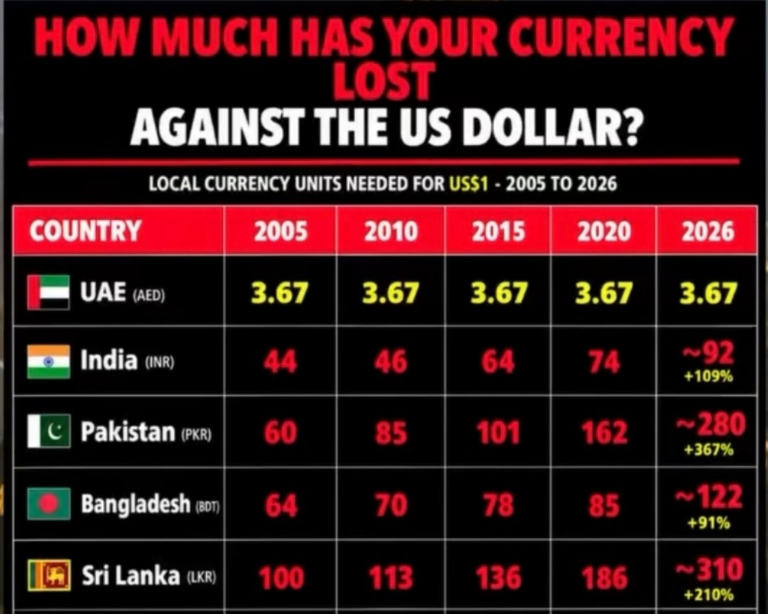
International How much has your currency lost against the US dollar?
Read more →
3
International How much has your currency lost against the US dollar?
Read more →
 4
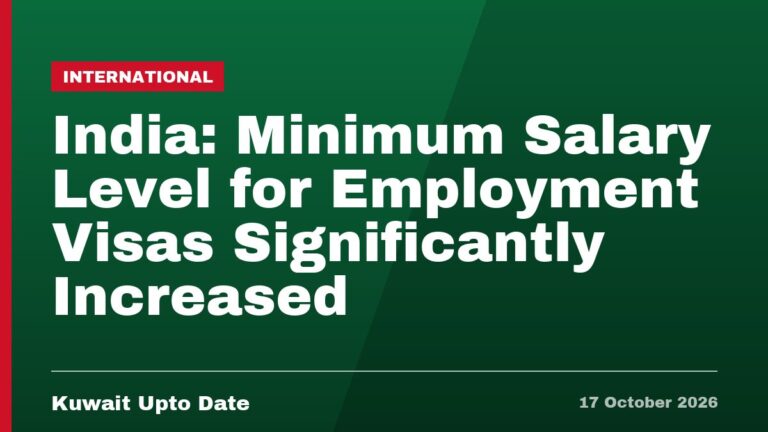
International India: Minimum Salary Level for Employment Visas Significantly Increased
Read more →
4
International India: Minimum Salary Level for Employment Visas Significantly Increased
Read more →
 5
International Roundabout Now a Signal, Cuts Travel Time 50%
Read more →
5
International Roundabout Now a Signal, Cuts Travel Time 50%
Read more →
 6
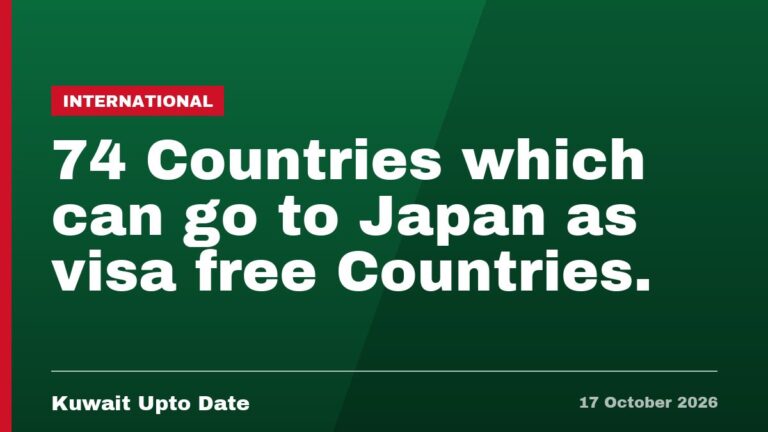
International 74 Countries which can go to Japan as visa free Countries.
Read more →
6
International 74 Countries which can go to Japan as visa free Countries.
Read more →
 7
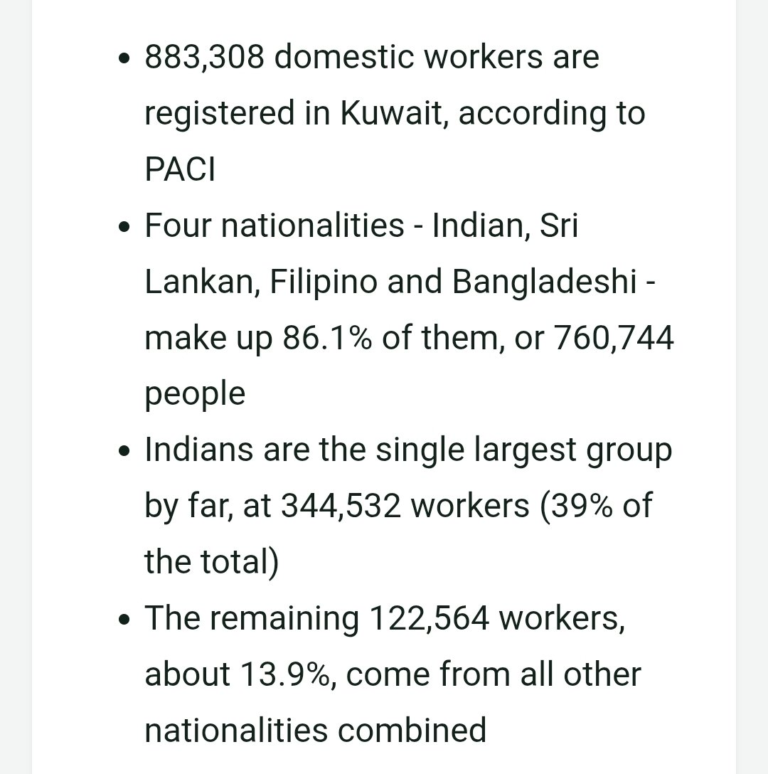
Local Indians on top in Kuwait’s Domestic Worker Numbers
Read more →
7
Local Indians on top in Kuwait’s Domestic Worker Numbers
Read more →
 8
Local Indian families in Kuwait left without water
Read more →
8
Local Indian families in Kuwait left without water
Read more →
 9
Local 17 Arrested in Kuwait’s 5 stars Hotel
Read more →
9
Local 17 Arrested in Kuwait’s 5 stars Hotel
Read more →
 10
International Two Bangladeshis held over indecent act inside Makkah mosque
Read more →
10
International Two Bangladeshis held over indecent act inside Makkah mosque
Read more →
 11
Local Kuwait Scam: One App Approval Wipes Out Bank Balance
Read more →
11
Local Kuwait Scam: One App Approval Wipes Out Bank Balance
Read more →
 12
Local Employer Not Paying Your Indemnity? Here’s What to Do
Read more →
12
Local Employer Not Paying Your Indemnity? Here’s What to Do
Read more →
 13
Local Karen Wazen x Joe & The Juice Drop a Silver Sandwich Collab
Read more →
13
Local Karen Wazen x Joe & The Juice Drop a Silver Sandwich Collab
Read more →
 14
International Tesla Roadster With Rocket Thrusters: Price, Specs and 2028 Launch
Read more →
14
International Tesla Roadster With Rocket Thrusters: Price, Specs and 2028 Launch
Read more →
 15
Local Convert Visit Visas to Residency for KD 150
Read more →
15
Local Convert Visit Visas to Residency for KD 150
Read more →