

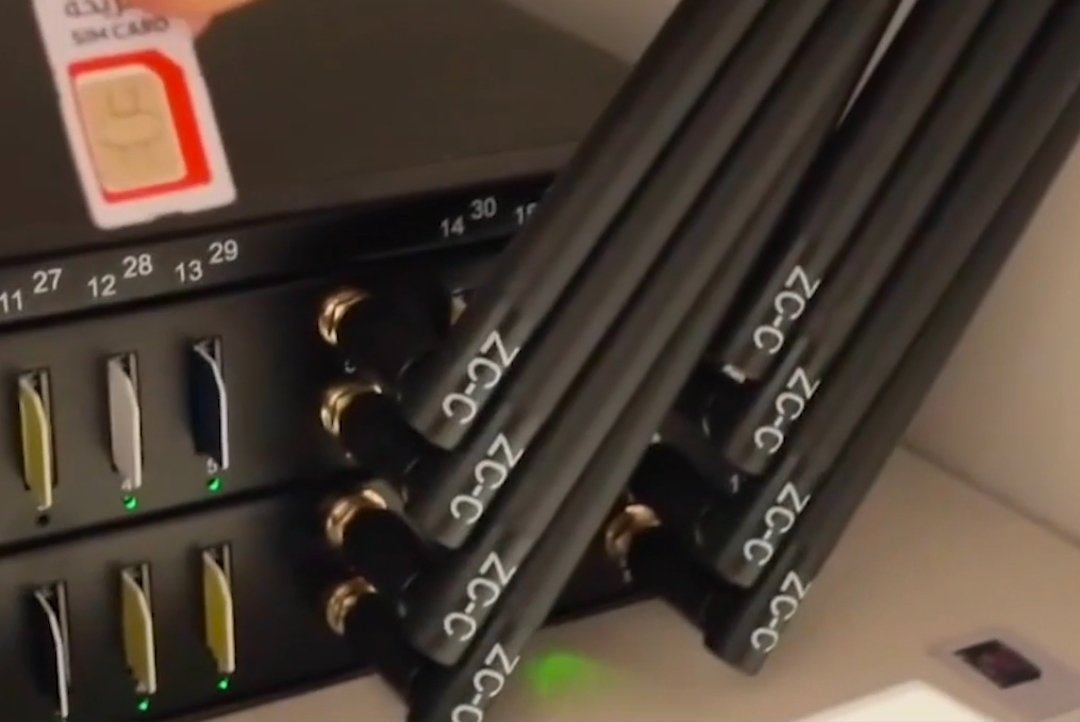
One phone call from a number that looks completely local can actually be run by a criminal network working across borders.
https://twitter.com/Snnkwt/status/2124576173057319225
That’s what Kuwait’s Interior Ministry says happened in a case it has just announced, made possible through security cooperation with the United Arab Emirates. A suspect linked to a cross-border criminal network has been arrested. Investigators say the network used local Kuwaiti phone numbers to carry out scams and financial fraud.
If you’ve ever had a strange call or text claiming to be from a bank, a ministry or a delivery company, this case touches exactly that kind of worry. It also follows a string of warnings this year about fake MoI letters used in bank scams.
- Kuwait’s Interior Ministry arrested a suspect tied to a cross-border scam network.
- The operation involved security cooperation between Kuwait and the UAE.
- The network allegedly used local Kuwaiti phone numbers to run scams and financial fraud.
- No names, nationality, number of victims or amounts of money have been released yet.
What the Interior Ministry actually said
The statement is short. It confirms one suspect was apprehended and links the case to a wider criminal network operating across more than one country. The ministry says this network used Kuwaiti phone numbers specifically to make scam calls and messages look trustworthy and local.
It doesn’t say how long the investigation took, how the suspect was tracked, or exactly what role the UAE authorities played beyond general security cooperation. It also doesn’t give the suspect’s nationality, age or how many people in Kuwait may have been targeted or lost money. Until officials release more details, these points stay unconfirmed.
This kind of cross-border teamwork isn’t new for the region. Kuwait has been working more closely with its neighbours on security matters this year, including plans to link deportee fingerprint data electronically with the GCC and tighter checks at land borders, as we reported when Kuwait sped up border checking around a major regional event.
Why scammers use local numbers in the first place
Scam networks often use numbers that look Kuwaiti because people are far more likely to answer, and to trust, a call that seems to come from inside the country. A foreign number raises suspicion straight away. A local-looking number doesn’t.
This matches what cyber security experts have already been telling Kuwait residents. Earlier this month, one expert laid out what Kuwait must do about bank impersonation scams, warning that fraudsters are getting better at mimicking real institutions. The Central Bank of Kuwait has also told the public to report unlicensed money transfers when something feels off.
So the tools scammers use are becoming familiar. What’s less clear in this case is how the network actually obtained or faked Kuwaiti numbers, and whether this suspect was a local contact, a technical operator, or something else. The ministry hasn’t broken that down yet.
What this means for people in Kuwait
For both citizens and expats, the practical lesson hasn’t changed: a Kuwaiti-looking number is not proof that a call or message is genuine. Banks, ministries and government bodies in Kuwait do not usually ask for passwords, OTP codes or bank card details over the phone.
If you get a call asking for personal or banking information, the safest move is to hang up and contact the institution directly using a number you already know is correct, not one given to you during the call. This is also why Kuwait has been pushing residents to turn on two-factor authentication and fingerprint login on banking and government apps, since it adds a second barrier even if someone tricks you into giving a password.
Latest News
 Local
Kuwait court jails lawyer 3 years
2 Local Farwaniya cuts power to 10 properties over violations Read more → 3 Local Kuwait court hands down two death sentences in one day Read more → 4 Local Mother and daughter acquitted over Kuwait cat sale row Read more → 5 International Video – Run Challenge 2026: robots race alongside thousands Read more → 6 Local 516 residents must update address in 30 days or pay KD 100 Read more → 7 Local Kuwait set for warm days up to 33°C this week Read more → 8 International Iranian attack on Bahrain injures two, one Pakistani in critical condition Read more → 9 Local PAM warns Kuwait employers over salary transfer rules Read more → 10 Local Gold prices drop in Kuwait, sparking a buying rush Read more → 11 International Mecca region under emergency alert amid Gulf tensions Read more → 12 Local Kuwait may set new fees and fines Read more → 13 International Iran attack hits Bahrain factory, sparks fire, no injuries Read more → 14 Local Kuwait’s Avenues Mall ranks No. 1 globally, beats Dubai malls Read more → 15 Local Kuwait’s top court confirms death sentence in suitcase murder case Read more →
Leave a Reply