

If you run a company in Kuwait, or you’re the one filling out the compliance forms for one, you’ve probably been asked before: who really owns this business? Usually that’s an easy question. Check the shareholder register, find whoever holds 25 percent or more, done.
Kuwait’s new guidance, issued in August 2026, says that’s not always enough. In some cases, the person who truly calls the shots isn’t a shareholder at all. It could be a bank.
That sounds unusual, but it comes down to something a lot of companies sign without thinking twice about: loan covenants.
- Kuwait’s beneficial ownership rules require identifying a natural person who owns or controls 25 percent or more of a company.
- Where no one meets that bar, the law looks at who controls the company “through other means” – including through financing terms.
- If a lender’s loan conditions give it effective authority over a company’s major decisions, that lender may need to be treated as a beneficial owner.
- The ultimate beneficial owner must always be a real person, not a bank or corporate entity.
So what actually counts as control?
Under Kuwait’s AML/CFT framework, the starting point is ownership: does anyone hold 25 percent or more of the shares or voting rights? If yes, that person is usually the beneficial owner.
But the guidance makes clear that shareholding is only the first filter, not the final answer. If no one crosses that 25 percent line, or if there’s real doubt the shareholder on paper is the one actually running the show, the analysis shifts to who exercises control “through other means.” That’s defined as the ability to make important decisions for the company and to impose them.
In practice, that means a shareholder with a small stake could still qualify as a beneficial owner if they call the shots. And someone with zero shares – a lender, an adviser, even a senior manager – could qualify too, if they’re the one with ultimate control.
Where do loan covenants come in?
Most financing agreements include covenants that protect the lender – nothing unusual there. But the guidance flags a specific scenario: when those covenants go further than protection and start restricting management so heavily that the company can’t make meaningful financial or operational decisions without the lender’s sign-off.
Picture a company with no shareholder holding 25 percent or more. It takes on substantial financing, and the loan terms mean management can’t move on anything significant without the lender’s approval. At that point, according to the guidance, the lender may be the one with ultimate control – and therefore the beneficial owner.
Taking out a loan on its own doesn’t trigger this. It’s about how much real decision-making power the lender has been handed.
There’s a wrinkle, though. If the lender is itself a bank or company, it can’t simply be recorded as the beneficial owner, because Kuwait’s definition requires a natural person. So the inquiry has to go one step further: which actual person, inside that lending institution, exercises the control.
What this means if you run or advise a business here
For company owners and compliance officers, this changes what a beneficial ownership check should look like. Pulling the commercial licence, the incorporation papers and the shareholder register used to be enough in most cases. Under this guidance, it might not be.
The guidance also lists other situations worth a closer look: minority shareholders acting together through side agreements, contractual arrangements that hand someone outsized influence, people with the power to hire or fire management, strategic advisers who steer decisions, and senior executives who run things in practice regardless of what the org chart says.
Banks, law firms and compliance teams doing customer due diligence may now need to ask for financing agreements and governance documents, not just the usual company paperwork.
Quick answers
Does every loan make a lender a beneficial owner?
No. The guidance is clear that simply lending money doesn’t trigger this. It only applies where the loan terms give the lender real, substantial control over the company’s financial and operational decisions.
Can a bank itself be listed as the beneficial owner?
No. Kuwait’s definition requires the beneficial owner to be a natural person, so even where a lending institution holds the control, the analysis has to trace through to the actual individual behind it.
If you’re involved in running a company here, this is worth a second look at your financing agreements rather than assuming the shareholder register tells the whole story. Have you had to deal with a beneficial ownership review recently? Let us know how it went in the comments.
📌 Related stories




⭐ Get Kuwait Upto Date first on Google.
Add us as a preferred source and see our news more in Google’s Top Stories.
Latest News
 International
Denmark Publishes List of 982 Firms Approved to Hire Foreign Workers
International
Denmark Publishes List of 982 Firms Approved to Hire Foreign Workers
 2
International Two Gulf Airports Named Among World’s Most Beautiful Terminals
Read more →
2
International Two Gulf Airports Named Among World’s Most Beautiful Terminals
Read more →
 3
Local He is not His Father’s Son And His Son is not His Son, DNA caught the case in Kuwait.
Read more →
3
Local He is not His Father’s Son And His Son is not His Son, DNA caught the case in Kuwait.
Read more →
 4
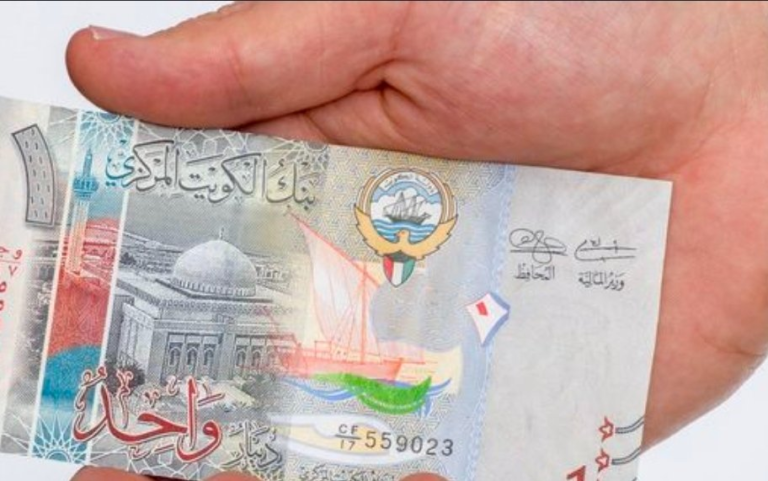
Local Carrying KD 3,000 or More in Kuwait? You Must Declare It
Read more →
4
Local Carrying KD 3,000 or More in Kuwait? You Must Declare It
Read more →
 5
International Kuwait-raised Ruth Zachariah is runner-up at Miss South India UK
Read more →
5
International Kuwait-raised Ruth Zachariah is runner-up at Miss South India UK
Read more →
 6
Local Shopping of KD 700 in Kuwait Just by registering yourself in app, enjoy.
Read more →
6
Local Shopping of KD 700 in Kuwait Just by registering yourself in app, enjoy.
Read more →
 7
International Houthi Drone Targets Power Station Near Madinah’s Grand Mosque
Read more →
7
International Houthi Drone Targets Power Station Near Madinah’s Grand Mosque
Read more →
 8
Local How to Get a Personal Loan in Kuwait: Banks, Rules and Steps
Read more →
8
Local How to Get a Personal Loan in Kuwait: Banks, Rules and Steps
Read more →
 9
International Social Media Checks on Visas.
Read more →
9
International Social Media Checks on Visas.
Read more →
 10
Local Farwaniya Raid Finds Bad Food: Nearly 99kg Destroyed
Read more →
10
Local Farwaniya Raid Finds Bad Food: Nearly 99kg Destroyed
Read more →
 11
Local Making Extra Money in Kuwait: Legal Options for Expats
Read more →
11
Local Making Extra Money in Kuwait: Legal Options for Expats
Read more →
 12
International Airport to Install Full-Body Scanners, Kuwait Travellers Take Note.
Read more →
12
International Airport to Install Full-Body Scanners, Kuwait Travellers Take Note.
Read more →
 13
Local Kuwait court jails 8 expats.
Read more →
13
Local Kuwait court jails 8 expats.
Read more →
 14
Local Kuwait’s Digital Salary System: What It Means for Expat Workers ?
Read more →
14
Local Kuwait’s Digital Salary System: What It Means for Expat Workers ?
Read more →
 15
Local Step by Step : How to make Online Complaint via Sahel app against your Kafeel (Employer).
Read more →
15
Local Step by Step : How to make Online Complaint via Sahel app against your Kafeel (Employer).
Read more →
Leave a Reply