
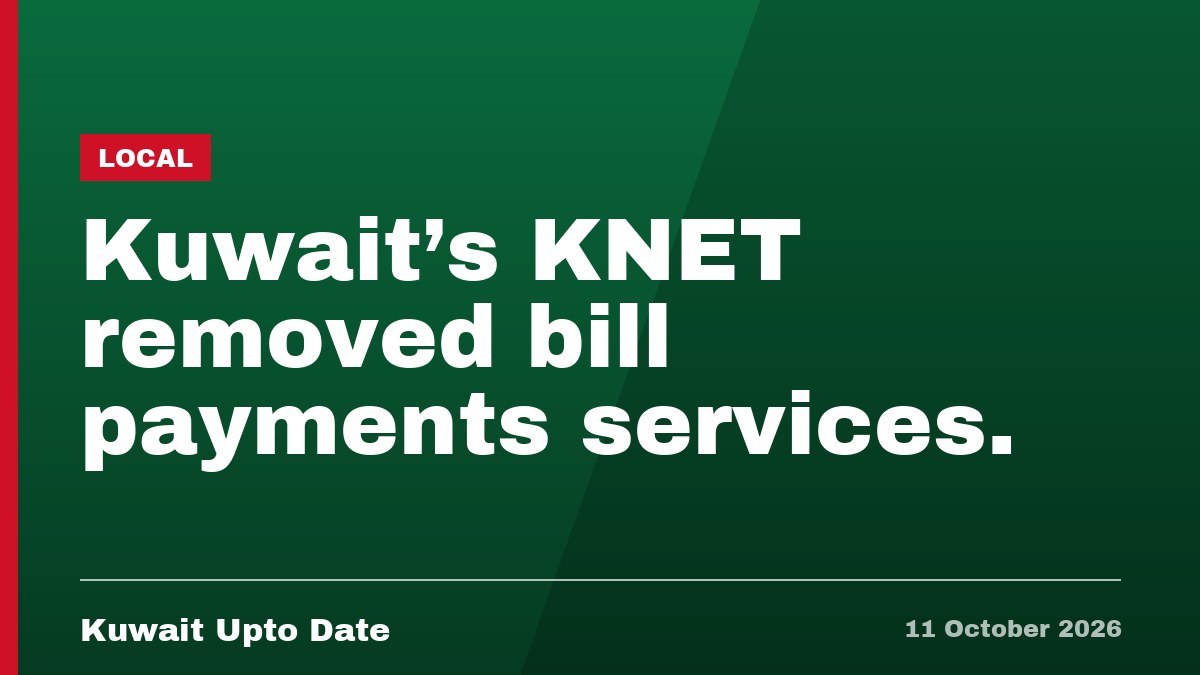
I came across this today and had to read it twice: the Central Bank of Kuwait has quietly changed what KNET is officially allowed to do. If you’ve ever paid a bill at a shop counter using the little KNET machine, this one’s worth five minutes of your time.
KNET isn’t just the card you tap at the supermarket. It’s the company behind almost every electronic payment in Kuwait, from salary transfers to utility bills. So when the Central Bank changes its registered activities, it’s not a small administrative footnote. It changes what the company can legally do with your money and transactions going forward.
- The Central Bank of Kuwait has amended KNET’s registration in its official list of electronic payment and e-money providers.
- Four new activities were added, including buying and selling land and real estate for the company’s own account.
- Electronic invoice collection, including through direct point-of-sale devices, has been removed from KNET’s registered services.
- The Central Bank gave no public reason for either the additions or the removal.
What exactly changed
According to the amendment, KNET’s registered activities now include buying and selling land and property, but only for the company’s own account, not on behalf of customers. It can also now own real estate and movable property for its own benefit, and it has been registered to print postage stamps, financial stamps, and paper currency for the state, along with printing cheques and ownership documents.
The fourth new activity is collecting and delivering money and other valuables, a service that goes beyond the simple card-swipe payments most of us associate with KNET.
At the same time, the Central Bank removed one activity from KNET’s list: electronic invoice collection, including collection carried out through direct point-of-sale machines. This is the service that lets businesses collect bill payments electronically, often through the small POS terminals you see at shop counters and service desks.
So why does this matter to me?
For most people in Kuwait, daily card payments at shops, petrol stations, and restaurants shouldn’t change. That side of KNET’s business isn’t what’s being removed here.
What’s being dropped is the e-bill collection function, specifically through POS devices. If you’ve used a KNET machine at a service counter to pay something like a utility bill or a government fee rather than buying something, that specific channel is the one affected. It’s not yet clear whether this service will shift to another provider, get folded into a different KNET product, or simply stop being offered this way. The report doesn’t say.
The new property and valuables activities are a bigger shift in direction. They suggest KNET is being positioned to do more than process card payments. Owning real estate for its own benefit and handling the collection and delivery of money and valuables point towards a company with a broader financial footprint than the one most of us grew up using at the till.
Who should pay attention
This update mostly concerns businesses and institutions that rely on KNET’s point-of-sale infrastructure for bill collection, government bodies and utility providers that use KNET to gather payments, and anyone tracking how Kuwait’s digital payment system is evolving alongside the country’s new salary payment system.
Everyday cardholders are unlikely to notice any immediate difference at checkout. But if your workplace, landlord, or local utility office has been collecting payments through a KNET POS device specifically set up for bills, it’s worth asking them whether that arrangement is changing.
If you’ve recently taken out financing through a bank, it’s also worth remembering that lenders can sometimes be treated differently under Kuwait’s financial rules, as covered in this piece on lenders and beneficial ownership. It’s a separate rule, but it shows how often the Central Bank has been adjusting the fine print of Kuwait’s financial system this year.
What’s still unclear
The Central Bank’s published amendment doesn’t explain why these four activities were added or why e-bill collection was dropped. There’s no timeline given for when the e-bill removal takes effect, and no word on whether an alternative collection method will replace it.
It’s also not confirmed whether KNET will start actively trading in property, or whether this registration change is more about formalising activities the company already carries out in a limited way, such as owning its own offices and equipment.
Quick answers
Does this affect my debit or credit card payments?
Not based on what’s been published. The change concerns KNET’s registered activities list with the Central Bank, not standard card payments at shops or online.
Will I still be able to pay bills using a KNET POS machine?
The specific service of collecting electronic invoices through direct POS devices has been removed from KNET’s registered activities. It’s not confirmed what, if anything, replaces it, so check with the business or office you usually pay through.
Can KNET now buy and sell property on my behalf?
No. The new real estate activity is limited to the company’s own account, meaning for its own benefit, not as a service offered to customers.
I’ll be keeping an eye on whether the Central Bank or KNET clarifies what happens to e-bill payments next. If you’ve noticed any change at a counter you usually pay bills at, it’s worth sharing in the comments so other readers know what to expect.
📌 Related stories




Latest News
 International
Houthi Group Threatens More Saudi Airport Attacks
International
Houthi Group Threatens More Saudi Airport Attacks
 2
International Flight attendant: Azza Ramzi Mohamed Hassan passed away in KSA’s Airport
Read more →
2
International Flight attendant: Azza Ramzi Mohamed Hassan passed away in KSA’s Airport
Read more →
 3
International WhatsApp new contacts tab with online status, birthdays
Read more →
3
International WhatsApp new contacts tab with online status, birthdays
Read more →
 4
Local KD 100 – if you lost your passport in Kuwait
Read more →
4
Local KD 100 – if you lost your passport in Kuwait
Read more →
 5
International Riyadh Airport Attack Toll Rises to 12 Dead, 309 Hurt
Read more →
5
International Riyadh Airport Attack Toll Rises to 12 Dead, 309 Hurt
Read more →
 6
International Kuwait Airways Flights to Riyadh Cancelled: Full Travel Update
Read more →
6
International Kuwait Airways Flights to Riyadh Cancelled: Full Travel Update
Read more →
 7
International 12 killed in attack on Riyadh airport, over 300 injured, Saudi authorities say
Read more →
7
International 12 killed in attack on Riyadh airport, over 300 injured, Saudi authorities say
Read more →
 8
Local Four Ethiopian Held Over KD 50,000 Cash Theft in Kuwait
Read more →
8
Local Four Ethiopian Held Over KD 50,000 Cash Theft in Kuwait
Read more →
 9
Local Kuwait Salary Rule for Family Visit Visas
Read more →
9
Local Kuwait Salary Rule for Family Visit Visas
Read more →
 10
Local Kuwait Climbs Global Innovation Rankings, But Gaps Remain
Read more →
10
Local Kuwait Climbs Global Innovation Rankings, But Gaps Remain
Read more →
 11
Local Kuwait’s New Dog Rules
Read more →
11
Local Kuwait’s New Dog Rules
Read more →
 12
International Emirates Rolls Out New U-Dream Headrest in Economy Class
Read more →
12
International Emirates Rolls Out New U-Dream Headrest in Economy Class
Read more →
 13
International Kuwait Moves Closer to Visa-Free Travel in Europe’s Schengen Zone
Read more →
13
International Kuwait Moves Closer to Visa-Free Travel in Europe’s Schengen Zone
Read more →
 14
International UAE Probe: Flydubai Co-Pilot Planned Suicide Attack on Tel Aviv Airport
Read more →
14
International UAE Probe: Flydubai Co-Pilot Planned Suicide Attack on Tel Aviv Airport
Read more →
 15
International Saudia Pilot Killed in Riyadh Airport Attack, Airline Confirms
Read more →
15
International Saudia Pilot Killed in Riyadh Airport Attack, Airline Confirms
Read more →
Leave a Reply