

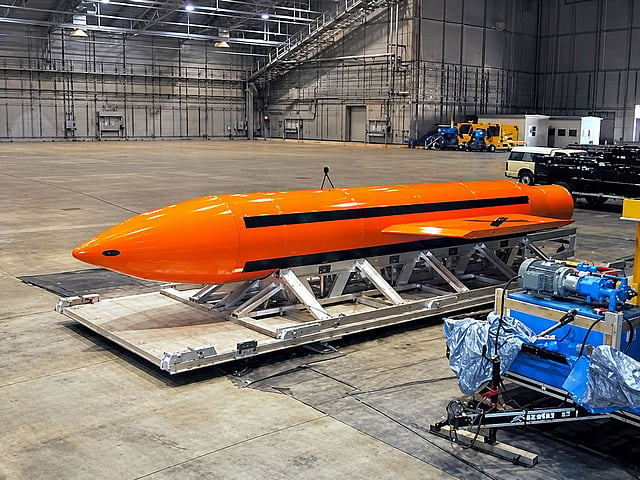
So, you know how everyone’s been talking about the US possibly going back into Iran? There’s a new twist, and it’s a big one. CNN is reporting that American military planners have been looking at using the “Mother of All Bombs” if President Trump orders fresh strikes. Yes, that bomb. The one with the dramatic nickname.
Before you picture mushroom clouds, let’s slow down. This is reportedly a contingency plan, not a done deal. Nobody has confirmed Trump has actually ordered this. Reuters picked up the same report and said it couldn’t independently verify it either. So treat this as “being discussed”, not “about to happen”.
- CNN reports US planners have an option to use the GBU-43/B MOAB against Iranian energy and nuclear sites
- One possible target is Pickaxe Mountain, a buried complex near Natanz tied to Iran’s nuclear programme
- Experts quoted by CNN doubt the MOAB can actually punch through the deep rock protecting such sites
- The White House and Pentagon gave no straight answers when asked about the plan
What exactly did the report say?
CNN says US military planners have drawn up options that include dropping the MOAB on Iranian energy infrastructure and nuclear-linked sites, if Trump decides to restart combat operations. One name that keeps coming up is Pickaxe Mountain, a deeply buried complex near Natanz. This is separate from Iran’s confirmed, operating uranium enrichment plant, and what’s actually inside it or how active it is isn’t clear yet.
This comes not long after reports that the US was weighing new strikes on Iran ahead of the midterms, so this MOAB talk fits into a bigger picture of military planning that’s been building for weeks.
Okay, but what actually is the MOAB?
MOAB stands for Massive Ordnance Air Blast. “Mother of All Bombs” is just the nickname that stuck. It’s a huge guided bomb, around 9,800 kilograms, packed with roughly 8,500 kilograms of explosive, according to the Air Force Armament Museum. It’s about nine metres long, uses GPS and inertial guidance to find its target, and it’s dropped from a C-130 aircraft with a special cradle that falls away once the bomb is released.
It was actually developed and tested back in 2003, so this isn’t some brand-new weapon. Its only combat use so far was in Afghanistan on 13 April 2017, during Trump’s first term in office.
So why would it struggle against Iran’s underground sites?
Here’s the catch, and it’s the whole point of the CNN report. The MOAB explodes above ground. It creates a massive blast over a wide area, which can wreck caves and tunnel entrances, sure. But it’s not built to drill through thick rock before it goes off. That’s a very different job from a purpose-built bunker-buster.
CNN’s sources specifically questioned whether the MOAB could do real damage to whatever sits beneath Pickaxe Mountain’s granite covering. They also flagged worries about civilian casualties if it’s used anywhere near populated areas, given how wide that blast radius is. Basically: big boom, but maybe not the right kind of boom for a deeply buried target.
Is this the same as a bunker-buster bomb?
No, and this is where a lot of headlines get it wrong. The MOAB is often called America’s “biggest non-nuclear bomb”, but that needs a caveat. There’s another weapon, the GBU-57 Massive Ordnance Penetrator, or MOP, that’s actually heavier, at around 13,600 kilograms. The MOP is specifically designed to punch into hardened, deeply buried targets before it detonates. The MOAB’s job is a wide blast on the surface. Different tools for different problems.
So if the goal is actually destroying something buried deep in a mountain, the MOP sounds like the more obvious choice on paper. Which makes you wonder why MOAB is even part of the conversation. Possibly it’s about the fear factor, or about targets that aren’t as deeply buried. We don’t know for sure, and the report doesn’t say.
What have US officials actually said?
Not much, honestly. The White House declined to discuss sensitive military planning when CNN asked. The Pentagon gave the kind of answer you’d expect, saying it prepares for a range of operational scenarios. Neither of those lines confirms a decision has been made to use the MOAB, or to strike Iran at all for that matter.
<p>[EDITOR NOTE: add any regional reaction or Gulf government statements on renewed Iran strike talk, if available]</p>
What this means if you’re in Kuwait
I won’t pretend to know how this plays out. But if you live here, this is the kind of story worth keeping half an eye on. Kuwait sits close enough to Iran that any real escalation, not just planning talk, tends to ripple through flight schedules, oil prices and general nerves in the region. We’ve already covered the Houthi drone attack near Madinah as a reminder that tensions in the wider region haven’t cooled off. And after the blast in Riyadh that killed an Indian national, it’s clear these risks aren’t abstract for people living and working in the Gulf.
For now though, nothing has actually happened. This is a reported option on a planning document, not an attack. I’d keep that in mind before getting too worried.
Quick answers
Has the US confirmed it will use the MOAB on Iran?
No. CNN’s report describes contingency planning, not an authorised strike. The White House wouldn’t discuss it, and the Pentagon only said it prepares for various scenarios.
Is the MOAB the same as a bunker-buster?
No. The MOAB creates a wide surface blast. The bunker-buster, called the MOP, is a heavier, purpose-built weapon designed to penetrate deep underground targets.
Has the MOAB been used in combat before?
Yes, once. The US dropped it in Afghanistan on 13 April 2017, during Trump’s first term.
Could the MOAB destroy Iran’s nuclear sites?
That’s doubtful, according to sources CNN spoke to. They questioned whether it can break through the deep rock protecting sites like the one reportedly under Pickaxe Mountain near Natanz.
Honestly, this feels like one of those stories where the headline sounds scarier than the actual facts. A weapon being discussed isn’t the same as a weapon being used. I’ll be watching for what comes next, and I’d love to hear what you think this means for the region in the comments.
📌 Related stories


Latest News
 Local
Is Ronaldo coming to Kuwait ?
Local
Is Ronaldo coming to Kuwait ?
 2
Local Changing Jobs Before Your Kuwait Contract Ends: What to Know
Read more →
2
Local Changing Jobs Before Your Kuwait Contract Ends: What to Know
Read more →
 3
Local Kuwait court: mother’s move abroad doesn’t cancel custody
Read more →
3
Local Kuwait court: mother’s move abroad doesn’t cancel custody
Read more →
 4
Local Filipino man gets 5 years prisoner in Kuwait
Read more →
4
Local Filipino man gets 5 years prisoner in Kuwait
Read more →
 5
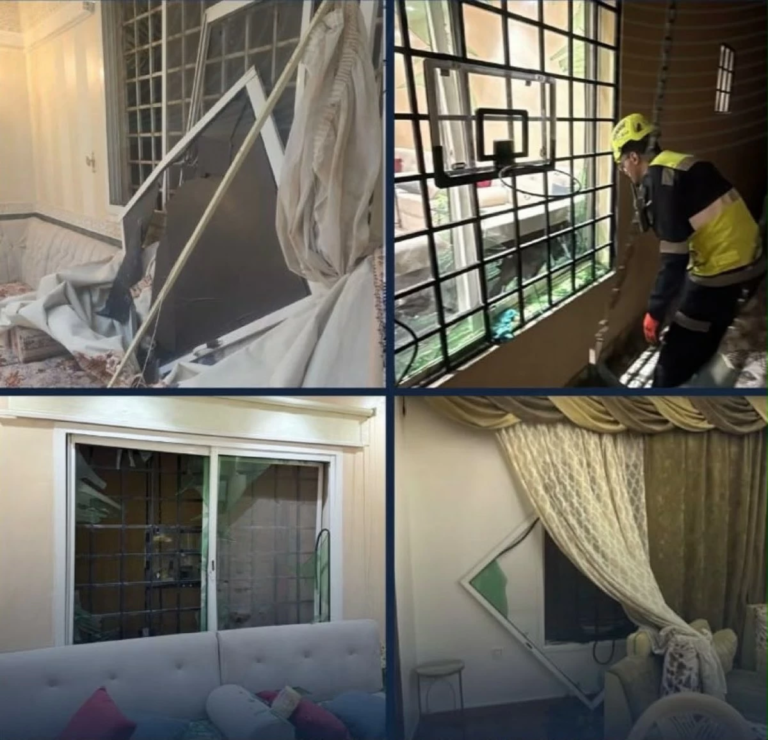
International Houthi missile debris over Riyadh injures 4, damages 15 homes
Read more →
5
International Houthi missile debris over Riyadh injures 4, damages 15 homes
Read more →
 6
Local A citizen posted a video of a bike rider.
Read more →
6
Local A citizen posted a video of a bike rider.
Read more →
 7
Local Kuwait dog owners must now get licence, metal tag or face fine
Read more →
7
Local Kuwait dog owners must now get licence, metal tag or face fine
Read more →
 8
Local Native desert plants to Jaber Mall gardens
Read more →
8
Local Native desert plants to Jaber Mall gardens
Read more →
 9
International Pakistan orders smart scanners to end airport baggage hassles
Read more →
9
International Pakistan orders smart scanners to end airport baggage hassles
Read more →
 10
International New school dress code in Azerbaijan bans hijabs, sets off protests
Read more →
10
International New school dress code in Azerbaijan bans hijabs, sets off protests
Read more →
 11
International 4 Indians Still in ICU as Riyadh Flight Bans Extended to Oct 17
Read more →
11
International 4 Indians Still in ICU as Riyadh Flight Bans Extended to Oct 17
Read more →
 12
International Jeddah Tower vs Burj Khalifa: who wins the height race?
Read more →
12
International Jeddah Tower vs Burj Khalifa: who wins the height race?
Read more →
 13
International New Rule Lets Staff Open Your Bag Without You Present
Read more →
13
International New Rule Lets Staff Open Your Bag Without You Present
Read more →
 14
International Why Gulf Workers Still Hide Mental Health Struggles at Work
Read more →
14
International Why Gulf Workers Still Hide Mental Health Struggles at Work
Read more →
 15
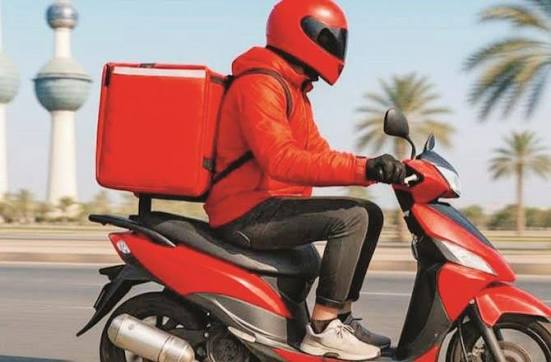
Local New Traffic Crackdown on Delivery Riders Starts 18 October in Kuwait
Read more →
15
Local New Traffic Crackdown on Delivery Riders Starts 18 October in Kuwait
Read more →
Leave a Reply