

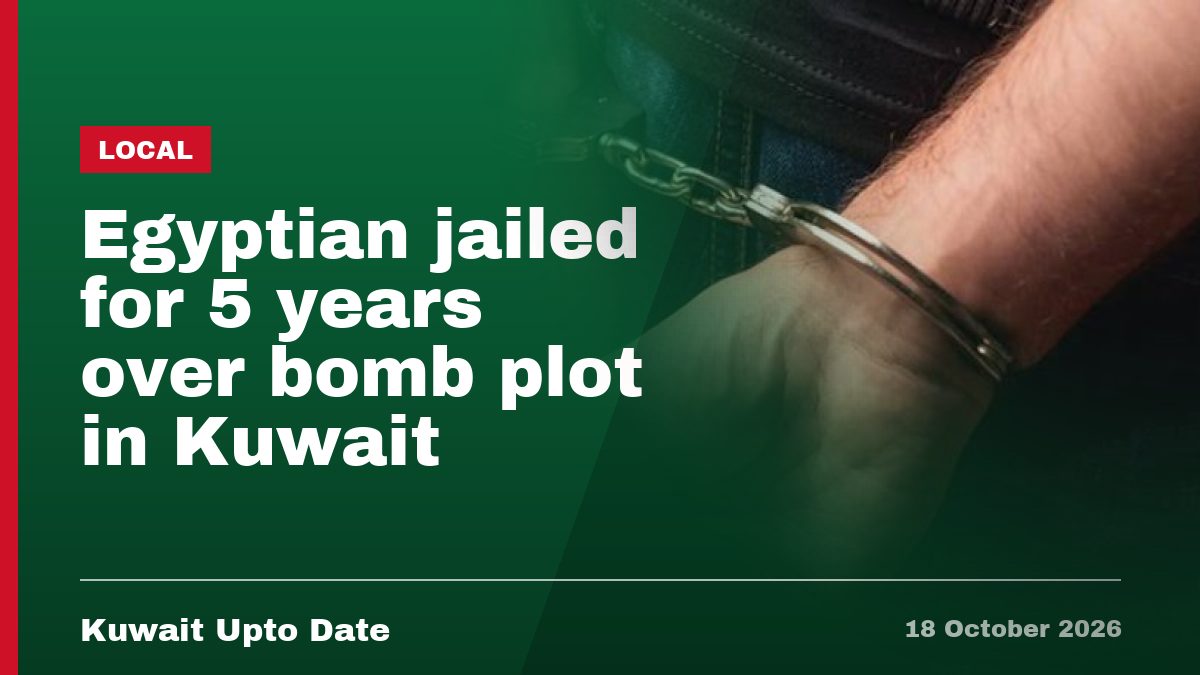
Five years. That’s the sentence a Kuwait court has just handed down to an Egyptian national convicted of planning to bomb Shia places of worship in the country.
WhatsApp ChannelJoin our WhatsApp ChannelGet Kuwait news, new rules, fees and deadlines straight on WhatsApp. Free – no spam, no group chat.Join Channel →The ruling came from the State Security Circuit of Kuwait’s Court of Appeal, which found the man guilty of belonging to Daesh (ISIS), receiving training in explosives, and plotting attacks on Hussainiyas – the halls used by Shia Muslims for worship and commemorative gatherings. He was also convicted separately of publicly insulting Kuwait’s Emir, according to Al Qabas daily.
It’s the kind of case that doesn’t always make headlines outside the courtroom, but it touches on something a lot of people in Kuwait care about: the safety of places where people quietly go to pray.
- An Egyptian national was sentenced to 5 years in prison by Kuwait’s Court of Appeal.
- He was convicted of belonging to Daesh, receiving explosives training, and plotting to bomb Hussainiyas.
- He was also found guilty of publicly insulting Kuwait’s Emir.
- Kuwait’s State Security Department had been monitoring him before his arrest.
How the plot was uncovered
According to the court record, Kuwait’s State Security Department began monitoring the defendant’s movements after picking up on an alleged plan to carry out bomb attacks against places of worship. That surveillance led investigators to believe he was preparing to target Hussainiyas specifically.
When officers eventually searched his residence, they say they found equipment and materials used to manufacture explosives. Alongside that, investigators reportedly recovered documents detailing how to prepare and deploy improvised explosive devices. That combination – training, materials and a stated target – formed the backbone of the case against him.
This isn’t the first time Kuwait’s security services have intervened before an alleged plot could go further. As we reported, Kuwait arrested two minors over an alleged ISIS plot targeting a place of worship, which points to Hussainiyas and similar sites being treated as a recurring concern for the State Security Department.
What the court actually ruled
The State Security Circuit of the Court of Appeal convicted the man on both counts: membership of Daesh with explosives training and an intent to bomb Hussainiyas, and separately, insulting the Emir in public. The five-year prison term covers these findings together.
It’s worth being precise here: the source report doesn’t give the man’s age, how long he had been in Kuwait, or exactly when the arrest and trial took place. Those details haven’t been made public in what’s been reported so far.
Why this matters if you live in Kuwait
For the Shia community in Kuwait, and for anyone who attends or lives near a Hussainiya, a case like this is a reminder that the country’s security agencies are actively watching for threats to religious sites, not just reacting after something happens. The plot was reportedly disrupted before any attack occurred.
For expats in general, it’s also a reminder of how seriously Kuwait’s courts treat extremist activity and affiliation with groups like Daesh. Kuwait has a documented history of prosecuting individuals linked to extremist networks, and sentences in these cases tend to be lengthy and public once the verdict is issued, even if the investigation itself stays quiet for a long time.
This case also sits alongside a string of security-related verdicts coming out of Kuwait’s courts recently. We’ve covered a Kuwaiti sentenced to life in London over an attack on the Israeli embassy, and a Syrian man jailed seven years for decades of citizenship fraud dating back to 1971. Together, these point to Kuwait’s courts actively working through a backlog of security and fraud cases this year. You can find more of this kind of coverage on our Local news hub.
Social media activity tied to extremist or sensitive content has also drawn court attention lately – as we reported in late September, a Kuwaiti court jailed five people in separate social media cases, a reminder that online posts and private messages can end up as evidence in cases far more serious than they first appear.
Quick answers
Was the defendant named?
No. The report doesn’t identify the Egyptian national by name, in line with how Kuwaiti court reporting typically handles ongoing or recently concluded security cases.
Did the attack actually happen?
No. The report describes a plot that was uncovered and disrupted through surveillance and a residence search, not a completed attack.
Can this sentence still be appealed?
The source report doesn’t say whether this ruling, from the Court of Appeal, is final or can be challenged further. That detail isn’t confirmed.
Cases like this rarely get much public attention beyond a single court report, yet they say a lot about what Kuwait’s security services are quietly working on. Worth keeping an eye on how these verdicts keep surfacing.
📌 Related stories



Latest News
 Local
Jazeera Airways Gets First of 26 New A320neo Jets
Local
Jazeera Airways Gets First of 26 New A320neo Jets
 2
Local Paper Car Insurance Ends in Kuwait on 25 October
Read more →
2
Local Paper Car Insurance Ends in Kuwait on 25 October
Read more →
 3
Local TICE 2026 in Kuwait: 1,000 delegates, 36 engineering awards handed out
Read more →
3
Local TICE 2026 in Kuwait: 1,000 delegates, 36 engineering awards handed out
Read more →
 4
Local Cisco’s CCNA, CCNP won’t count as a degree for Kuwait driving licence
Read more →
4
Local Cisco’s CCNA, CCNP won’t count as a degree for Kuwait driving licence
Read more →
 5
International Saudi Arabia hit by Houthi projectile: six hurt and sveveral homes damaged
Read more →
5
International Saudi Arabia hit by Houthi projectile: six hurt and sveveral homes damaged
Read more →
 6
International Fast-track family visas for Saudi Arabia for skilled professionals
Read more →
6
International Fast-track family visas for Saudi Arabia for skilled professionals
Read more →
 7
International Canada to give high earners more immigration from 3rd November 2026
Read more →
7
International Canada to give high earners more immigration from 3rd November 2026
Read more →
 8
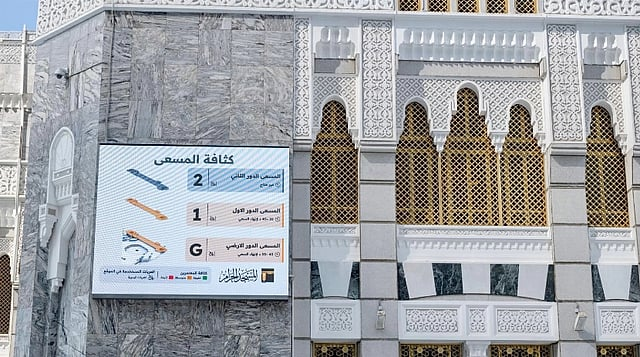
International Saudi Arabia launches live crowd tracker for Grand Mosque, Prophet’s Mosque
Read more →
8
International Saudi Arabia launches live crowd tracker for Grand Mosque, Prophet’s Mosque
Read more →
 9
Local Sri Lanka Now Kuwait’s Second Biggest Domestic Worker Group
Read more →
9
Local Sri Lanka Now Kuwait’s Second Biggest Domestic Worker Group
Read more →
 10
Local Kuwait Ends Paper Car Insurance
Read more →
10
Local Kuwait Ends Paper Car Insurance
Read more →
 11
Local Kuwait lifts bans on seven countries
Read more →
11
Local Kuwait lifts bans on seven countries
Read more →
 12
Local Kuwait Sets New Rules for Delivery Bike Riders
Read more →
12
Local Kuwait Sets New Rules for Delivery Bike Riders
Read more →
 13
Local Kuwait Police Recover KD 7,000 in Stolen Exhibition Jewellery from a woman
Read more →
13
Local Kuwait Police Recover KD 7,000 in Stolen Exhibition Jewellery from a woman
Read more →
 14
International Pakistani man’s Kuwait love story and its end
Read more →
14
International Pakistani man’s Kuwait love story and its end
Read more →
 15
International UAE Visa-on-Arrival Now Open to Six More Nationalities
Read more →
15
International UAE Visa-on-Arrival Now Open to Six More Nationalities
Read more →
Leave a Reply