
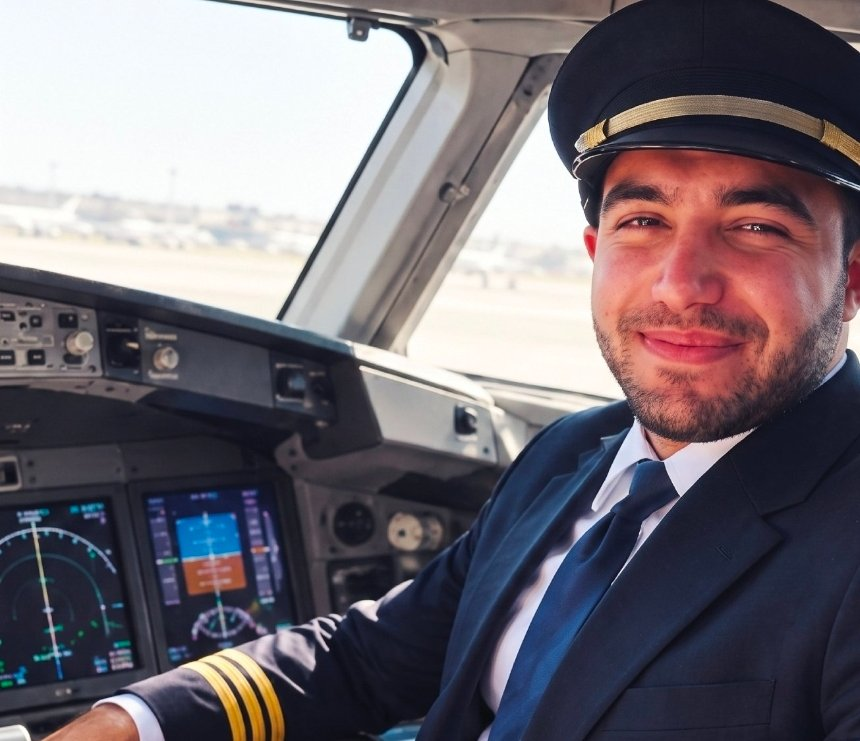
When news broke that a fight on board a Dubai-to-Tel Aviv flight had triggered a hijack alert, most people assumed it was a one-off scare. It wasn’t. UAE prosecutors now say the man at the centre of it had been planning something far more serious for years.
The UAE’s Public Prosecution has confirmed that the co-pilot on flydubai flight FZ1073, scheduled to fly from Dubai to Tel Aviv on 30 September 2026, had been carrying out a premeditated plan to seize the aircraft and crash it into the passenger terminal at Ben Gurion Airport, aiming to cause as much loss of life as possible.
- UAE Attorney-General Counsellor Dr Hamad Saif Al Shamsi says the investigation found a deliberate, planned terrorist plot, not a spontaneous incident.
- The suspect is a 29-year-old Omani co-pilot whose radicalisation is traced back to 2017, while he was studying in Australia.
- He reportedly used two earlier flights to Tel Aviv to study the route and the airport before acting on his third flight, on 30 September.
- Investigators also reviewed flydubai’s hiring process and found he met every professional and security requirement, with no signs of extremism detected at the time.
Add us as a preferred source and see our news more in Google’s Top Stories.
What the investigation found
According to Dr Al Shamsi, investigators traced the suspect’s path towards extremism back to 2017, during a period he spent studying in Australia. That is when he was reportedly drawn into takfiri ideology, reading extremist material and following online content that glorified terrorist groups and suicide attacks.
Over time, this hardened into a belief system centred on violence, the investigation found. Prosecutors say the suspect drew inspiration from the 11 September 2001 attacks in the United States, and that the idea of carrying out a similar attack using a passenger aircraft became fixed in his mind. He reportedly told investigators this was directly tied to his decision to train as a pilot in the first place.
That detail is worth sitting with. This wasn’t someone who snapped during a flight. If the findings are accurate, a career choice was shaped by an idea formed years before he ever sat in a cockpit.
How the plan was carried out
Investigators say the suspect used two earlier flights to Tel Aviv to familiarise himself with the flight route and the layout of the airport, describing this as part of his personal preparation. He then began acting on the plan during his third flight to Tel Aviv, on 30 September 2026, which is the flight that made headlines after a fight on board triggered a hijack alert at the time.
The source material does not go into exactly how the plot was stopped on board, and that detail isn’t confirmed yet. What is confirmed, according to the Attorney-General, is that the aircraft’s co-pilot was the one driving it.
How did he get hired as a pilot?
This is the part that will worry frequent flyers the most. Prosecutors say they also examined how flydubai recruited the suspect, to understand whether anything was missed.
The findings show he met all the professional and security requirements for the job. He held a valid pilot’s licence, provided a certificate of good conduct, and passed the required checks. None of those procedures, investigators say, turned up any sign of his extremist views or his intentions.
In other words, on paper, he looked like any other qualified co-pilot. That’s an uncomfortable fact for an industry that relies heavily on background checks and licensing to keep passengers safe.
What this means if you fly through the region
For residents in Kuwait who regularly use Dubai as a transit hub, or fly flydubai routes, this case is a reminder that aviation security isn’t only about what happens at the airport scanner. Crew vetting, psychological screening and ongoing monitoring of airline staff are now very much part of the conversation across the region.
It also follows a string of aviation security stories out of the Gulf in recent weeks, including an airport advisory telling travellers to check their flights and plans to roll out full-body scanners at major airports. Taken together, it’s clear airlines and regulators in the region are under real pressure to tighten up procedures.
<p>[EDITOR NOTE: add any personal experience flying flydubai or transiting through Dubai airport recently, or reader reaction to hearing this news]</p>
Quick answers
Who is the suspect?
Prosecutors describe him as a 29-year-old Omani national working as a co-pilot for flydubai. His name has not been released in the material available, so Kuwait Upto Date is not naming him.
Was anyone harmed?
The source material does not confirm any casualties or injuries resulting from the incident on 30 September.
Has he been charged?
The Public Prosecution has announced the findings of its investigation, but no information is yet available on formal charges or a trial date. This article will be updated once that becomes clear.
Stories like this are unsettling precisely because the warning signs weren’t visible on paper. If you were booked on a flight around that date, or regularly fly through Dubai, we’d like to hear how this news has changed the way you think about flying in the comments.
📌 Related stories
 International Filipino expats in lose thousands over fake self-sponsored visas
 International Airport to Install Full-Body Scanners, Kuwait Travellers Take Note.
 International Fight on Dubai to Tel Aviv Flight Triggers Hijack Alert
 International Visit Visa Extension: What Kuwait Travellers Should Know
Latest News
 International
Emirates Rolls Out New U-Dream Headrest in Economy Class
International
Emirates Rolls Out New U-Dream Headrest in Economy Class
 2
International Kuwait Moves Closer to Visa-Free Travel in Europe’s Schengen Zone
Read more →
2
International Kuwait Moves Closer to Visa-Free Travel in Europe’s Schengen Zone
Read more →
 3
International Saudia Pilot Killed in Riyadh Airport Attack, Airline Confirms
Read more →
3
International Saudia Pilot Killed in Riyadh Airport Attack, Airline Confirms
Read more →
 4
International UAE Drops Criminal Penalty for Attempted Suicide.
Read more →
4
International UAE Drops Criminal Penalty for Attempted Suicide.
Read more →
 5
Local Kuwait Logged Over 1.1 Million Traffic Violations in Five Months
Read more →
5
Local Kuwait Logged Over 1.1 Million Traffic Violations in Five Months
Read more →
 6
Local Kuwait Seizes 25,000 Chewing Tobacco Pieces in Shop Raids
Read more →
6
Local Kuwait Seizes 25,000 Chewing Tobacco Pieces in Shop Raids
Read more →
 7
Local Working Too Many Hours in Kuwait? Here’s What Kuwait Says About Overtime
Read more →
7
Local Working Too Many Hours in Kuwait? Here’s What Kuwait Says About Overtime
Read more →
 8
International Viral ‘safety pin on a train’ story has people talking l
Read more →
8
International Viral ‘safety pin on a train’ story has people talking l
Read more →
 9
Local Kuwait court jails man 2 years for blackmailing Filipina worker
Read more →
9
Local Kuwait court jails man 2 years for blackmailing Filipina worker
Read more →
 10
International Airport Tells Travellers to Check Flights
Read more →
10
International Airport Tells Travellers to Check Flights
Read more →
 11
International Riyadh Clinic Damaged by Intercepted Missile
Read more →
11
International Riyadh Clinic Damaged by Intercepted Missile
Read more →
 12
International Pakistani Jets Reportedly Joining Strikes on Houthis, NYT Says
Read more →
12
International Pakistani Jets Reportedly Joining Strikes on Houthis, NYT Says
Read more →
 13
Local Sahel Now Lets You Report 8 Labour Violations to Ministry
Read more →
13
Local Sahel Now Lets You Report 8 Labour Violations to Ministry
Read more →
 14
International Passport Free E-Gates at Airports
Read more →
14
International Passport Free E-Gates at Airports
Read more →
 15
International Saudi Airport Attacks: Moroccon, Algerian and a Sudan person died , 36 Hurt, Says Civil Aviation Body
Read more →
15
International Saudi Airport Attacks: Moroccon, Algerian and a Sudan person died , 36 Hurt, Says Civil Aviation Body
Read more →
Leave a Reply