
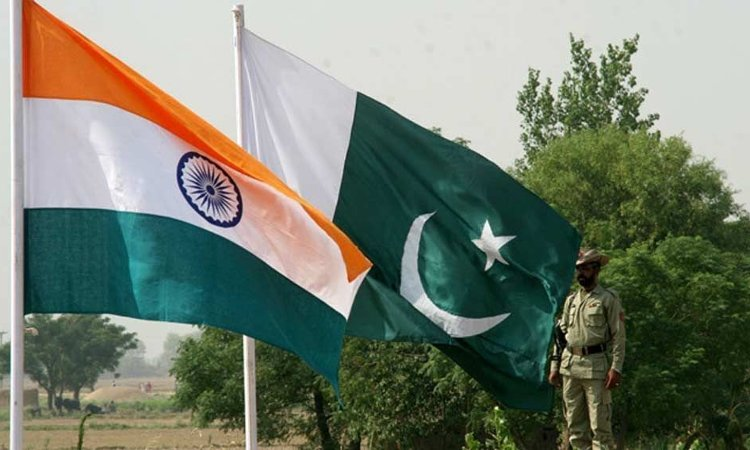
I came across this today and thought it was worth sharing, because Kuwait has plenty of families where one spouse is Indian and the other Pakistani. If you’re in that situation, or you know someone who is, this ruling from the Kerala High Court is going to matter to you.
A Pakistani woman married to an Indian citizen wanted to travel to India to attend her brother-in-law’s wedding. She couldn’t even find a way to submit a visa application, let alone get one approved. So the couple went to court, arguing that shutting the door on her completely, without even letting her apply, was unfair and against her basic rights.
The court didn’t agree.
The short version
- The Kerala High Court ruled that no foreign national, even the spouse of an Indian citizen, has a right to demand entry into India or to have a visa application considered.
- The judge, Justice Bechu Kurian Thomas, said visa decisions are a sovereign function tied to national security and foreign policy, not something courts can force.
- India suspended almost all visa services to Pakistani nationals after the Pahalgam attack of 22 April 2025, and that suspension is still in effect.
- The only visas still being processed for Pakistani nationals are medical, long-term, diplomatic and official visas.
Why the court ruled this way
The central government’s order came under Section 3 of the Foreigners Act, 1946, which gives it wide powers to regulate who enters the country. After the Pahalgam attack, the government issued an order on 25 April 2025 revoking almost all visas held by Pakistani nationals, effective from 27 April 2025, and pausing new visa services to them entirely.
The petitioners argued this violated their constitutional rights under Articles 14 and 21, since the wife couldn’t even submit a form. The Union government’s response was straightforward: entry into India is a privilege granted at the state’s discretion, not a right, and that applies no matter who you’re married to.
The court sided fully with the government, noting that this power exists to protect the country’s sovereignty, security and public order. It also pointed out that the old Foreigners Act has since been replaced by the Immigration and Foreigners Act, 2025, which came into force on 1 September 2025, though the underlying principle – that visa entry is discretionary – remains the same.
What this means if you’re in Kuwait
This case was decided in an Indian court and applies to Indian immigration law, but it’s directly relevant here because of how many households in Kuwait are mixed Indian-Pakistani families, whether through marriage, shared workplaces, or simply living in the same buildings and communities.
If you’re a Pakistani national married to an Indian citizen and were hoping to visit family in India, this ruling confirms that marriage alone won’t open that door while the current suspension stands. The court was clear that even long-term visa requests based on marriage don’t get special treatment outside the categories the government has already agreed to process.
For Indian citizens in Kuwait with a Pakistani spouse, it also means you can’t rely on courts to force the issue if an application is refused or simply can’t be filed. The remedy, if there is one, lies with the government changing its policy, not with litigation.
Quick answers
Can a Pakistani spouse of an Indian citizen still apply for a medical or long-term visa?
Yes. The suspension order specifically excludes medical, long-term, diplomatic and official visas from the freeze, so those categories are still meant to be processed.
Is this suspension permanent?
The court noted the order remains in force until the government revokes it. There’s no fixed end date mentioned, so anyone affected should keep checking for updates rather than assume it will lift automatically.
If this affects your family, it’s worth keeping an eye on official Indian government notices rather than assuming things have changed. Have you or someone you know run into this while trying to plan a family visit? I’d be curious to hear how you’ve handled it.
 📲 Get the Kuwait Upto Date app